 📸 Photo
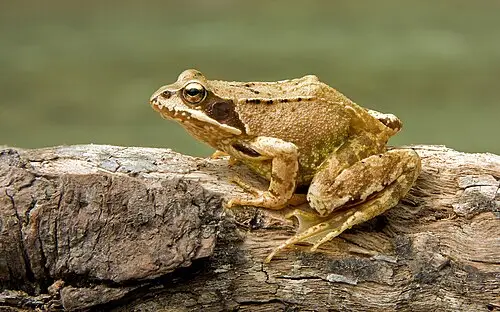
Photo: Richard Bartz , Munich aka Makro Freak Image:MFB.jpg · CC BY-SA 2.5 · Wikimedia Commons Source
Common Frog
Rana temporaria (Common Frog · ヨーロッパアカガエル)
💡 Everyday Comparisons for Size, Mass & Speed
- 💡 Its average weight of 22.7 g is about that of three Korean 500-won coins (7.7 g) (Comparison).
- 💡 In many parts of Europe its hind legs are eaten as a delicacy, it helps control mosquitoes and crop pests, and it is also used in school dissection classes and embryonic development research (ADW).
Reference standards: coach bus ~12 m, mid-size car ~4.9 m, compact car ~1 t, basketball hoop 3.05 m, credit card 8.56 cm.
Site-computed relative index from recorded values; not a formal scientific metric.
📖 1. Overview
The Common Frog is a widespread frog living in almost every damp habitat across Europe and is the most common frog in mountain lakes. It has a squat body and no tail.
🦴 2. Anatomy & Morphology
It has a broad, flat head with a brown-to-black triangular patch around the eardrum. Its muscular hind legs are used for jumping and swimming, and while its body is generally brown, it varies widely into gray, olive, yellow, and pinkish tones.
🔍 3. Ecology & Behavior
It eats insects, larvae, woodlice, spiders, snails, and earthworms, detecting earthworms by smell. Cold early-spring weather triggers mating, and the thick clumps of about 400 eggs hatch after 30–40 days without parental care.
🇰🇷 4. Connection to Korea
No direct record connecting this species to Korea has been found.
📚 Sources & References
- • IUCN Red List LC (2022) — https://www.iucnredlist.org/species/173101508/89705642
- • IUCN Red List category LC — latest assessment at iucnredlist.org
- • catalogueoflife.org — 6WR99
- • iucnredlist.org — 89705642
- • wikidata.org — Q27465
- • commons.wikimedia.org — File:European Common Frog Rana temporaria.jpg
- • animaldiversity.org — Rana temporaria
- • bok.or.kr — contents.do
- • Silhouette: PhyloPic — Beth Reinke · CC0 1.0
Recorded dimensions are widely cited representative estimates from public literature and may vary by study or specimen.