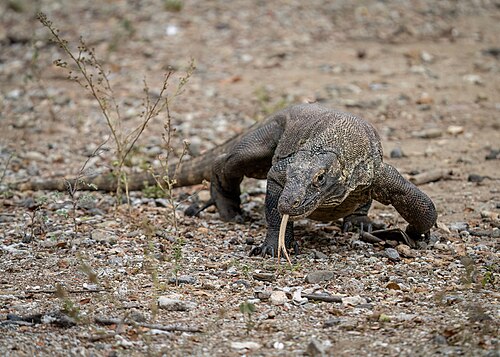
 📸 Photo
Varanus komodoensis in Nusa Tenggara Timur, Indonesia
Photo: James Jolokia ( james1203 ) · CC BY 4.0 · Wikimedia Commons Source
Komodo Dragon
Varanus komodoensis (Komodo Dragon · コモドオオトカゲ)
💡 Everyday Comparisons for Size, Mass & Speed
- 📏 Length 3m — ~1.7× the height of a 1.75 m adult human
- ⚖️ Mass 90kg — ~1.3× the mass of a 70 kg adult human
- ⚡ Speed 16km/h — ~4× human walking speed (~4 km/h)
Reference standards: coach bus ~12 m, mid-size car ~4.9 m, compact car ~1 t, basketball hoop 3.05 m, credit card 8.56 cm.
Site-computed relative index from recorded values; not a formal scientific metric.
📖 1. Overview
Reaching 3 m in length and 90 kg in weight, it is the largest extant lizard on Earth and a close terrestrial relative of the mosasaurs that ruled Mesozoic seas.
🌐 Wikipedia Summary ExtractThe Komodo dragon, also known as the Komodo monitor, is a large reptile of the monitor lizard family Varanidae that is endemic to the Indonesian islands of Komodo, Rinca, Flores, Gili Dasami, and Gili Motang. The largest extant population lives within the Komodo National Park in Eastern Indonesia. It is the largest extant species of lizard, with the males growing to a maximum length of 3 m (10 ft) and weighing up to 150 kg (330 lb).
🦴 2. Anatomy & Morphology
Along with 60 serrated teeth, its lower jaw houses genuine venom glands that inhibit blood clotting and induce hypotensive shock.
🔍 3. Ecology & Behavior
In isolated environments without males, females even possess the ability to reproduce on their own through parthenogenesis.
🇰🇷 4. Connection to Korea
It is a core model for studying gigantism in squamate lizards and the evolution of mosasaurs.
📚 Sources & References
- • Wikipedia “Komodo dragon”
- • Wikidata Q4504
- • IUCN Red List category EN — latest assessment at iucnredlist.org
- • animaldiversity.org — Varanus komodoensis
- • nationalzoo.si.edu — komodo-dragon
- • Silhouette: PhyloPic — Rachel T Mason · CC0 1.0 (Congeneric silhouette — Varanus gouldii)
Recorded dimensions are widely cited representative estimates from public literature and may vary by study or specimen.