 📸 Photo
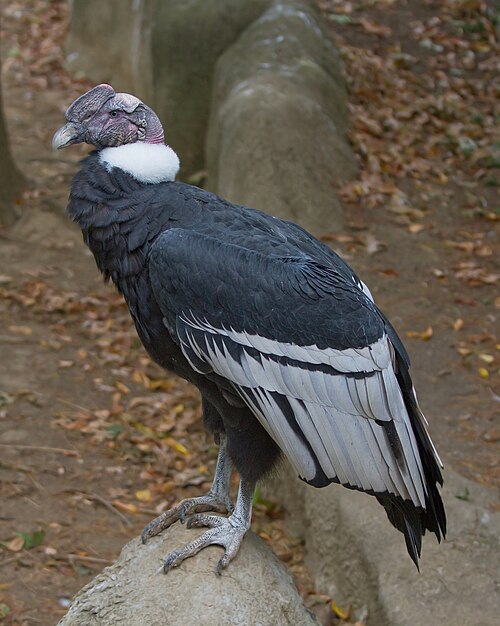
Male Andean Condor ( Vultur gryphus ) - taken at the Cincinnati Zoo, USA.
Photo: Greg Hume · CC BY-SA 3.0 · Wikimedia Commons Source
Andean Condor
Vultur gryphus (Andean Condor · アンデスコンドル)
💡 Everyday Comparisons for Size, Mass & Speed
- 📏 Length 97.5cm — ~3.3× the long side of an A4 sheet (29.7 cm)
- 🪽 Wingspan 3.2m — Wingspan is ~1.8× the height of a 1.75 m human
- ⚖️ Mass 7.7kg — Equivalent to ~3.9 two-liter water bottles (2 kg each)
- ⚡ Speed 90km/h — ~2.4× Usain Bolt's 100 m world-record average speed (37.6 km/h)
Reference standards: coach bus ~12 m, mid-size car ~4.9 m, compact car ~1 t, basketball hoop 3.05 m, credit card 8.56 cm.
Site-computed relative index from recorded values; not a formal scientific metric.
📖 1. Overview
With a wingspan of up to 3.3 m and a weight of up to 15 kg, it is a giant of the skies and the largest extant flying bird when combining wing area and body mass.
🌐 Wikipedia Summary ExtractThe Andean condor is a South American New World vulture and is the only extant member of the genus Vultur. It is found in the Andes mountains and adjacent Pacific coasts of western South America. With a maximum wingspan of 3.3 m and weight of 15 kg (33 lb), the Andean condor is one of the largest flying birds in the world, and is generally considered to be the largest bird of prey in the world.
🦴 2. Anatomy & Morphology
Because of its heavy body, once airborne it rarely flaps its wings, riding warm rising air currents (thermals) to glide unpowered for over 170 km in 5 hours.
🔍 3. Ecology & Behavior
One of the longest-lived birds with a lifespan reaching 50–70 years even in the wild, it was revered as the messenger of the Sun God in Inca civilization.
🇰🇷 4. Connection to Korea
It is the most important extant comparative model for studying the gliding mechanics of giant pterosaurs (such as Pteranodon).
📚 Sources & References
- • Wikipedia “Andean condor”
- • Wikidata Q170598
- • IUCN Red List category VU — latest assessment at iucnredlist.org
- • animaldiversity.org — Vultur gryphus
- • Silhouette: PhyloPic — Mark P. Witton & Darren Naish · CC BY 3.0
Recorded dimensions are widely cited representative estimates from public literature and may vary by study or specimen.