 📸 Photo
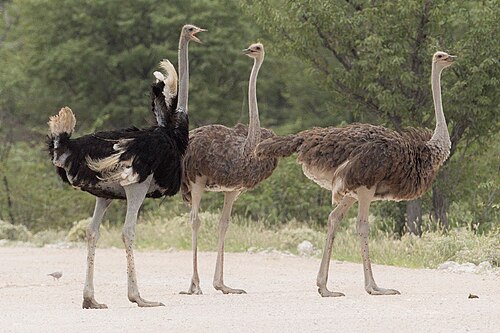
Common ostrich male and females in Etosha National Park
Photo: Yathin S Krishnappa · CC BY-SA 4.0 · Wikimedia Commons Source
Common Ostrich
Struthio camelus (Common Ostrich · ダチョウ)
💡 Everyday Comparisons for Size, Mass & Speed
- 📏 Length 2.1m — ~1.2× the height of a 1.75 m adult human
- 🏢 Height 2m — ~1.1× the height of a 1.75 m human
- ⚖️ Mass 90kg — ~1.3× the mass of a 70 kg adult human
- ⚡ Speed 70km/h — ~1.9× Usain Bolt's 100 m world-record average speed (37.6 km/h)
Reference standards: coach bus ~12 m, mid-size car ~4.9 m, compact car ~1 t, basketball hoop 3.05 m, credit card 8.56 cm.
Site-computed relative index from recorded values; not a formal scientific metric.
📖 1. Overview
Standing 2.7 m tall and weighing 140 kg, it is the largest of all extant birds and the king of ratites, sprinting on two legs at 70 km/h.
🌐 Wikipedia Summary ExtractThe common ostrich, or simply ostrich, is a species of flightless bird native to certain areas of Africa and is the largest living species of bird. The common ostrich is one of two extant species of ostriches, the only living members of the genus Struthio in the ratite group of birds. The other is the Somali ostrich, which has been recognised as a distinct species by BirdLife International since 2014, having been previously considered a distinctive subspecies of ostrich.
🦴 2. Anatomy & Morphology
With an eyeball diameter of 5 cm—the largest eyes of any land vertebrate—it is the only bird with just 2 toes per foot, minimizing ground friction for high-speed sprinting.
🔍 3. Ecology & Behavior
A single egg weighs 1.5 kg (equivalent to 25 chicken eggs), and its leg strength is powerful enough to repel a lion's attack with a single forward kick.
🇰🇷 4. Connection to Korea
It is the best extant comparative anatomy model illustrating the bipedal locomotion mechanism of Mesozoic ostrich-mimic dinosaurs (ornithomimosaurs).
📚 Sources & References
- • Wikipedia “Common ostrich”
- • Wikidata Q17592
- • IUCN Red List category LC — latest assessment at iucnredlist.org
- • animaldiversity.org — Struthio camelus
- • Silhouette: PhyloPic — Ferran Sayol · CC0 1.0
Recorded dimensions are widely cited representative estimates from public literature and may vary by study or specimen.