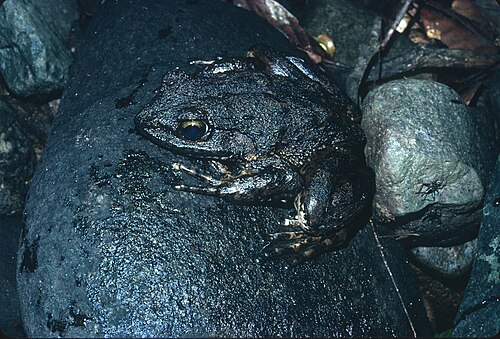
 📸 Photo
Conraua goliath ゴライアスガエル
Photo: jeanlouisamiet · CC BY 4.0 · Wikimedia Commons Source
Goliath Frog
Conraua goliath (Goliath Frog · ゴリアテガエル)
💡 Everyday Comparisons for Size, Mass & Speed
- 📏 Length 17cm — ~2× the width of a credit card (8.56 cm)
- ⚖️ Mass 600g — Equivalent to ~10 chicken eggs (~60 g each)
Reference standards: coach bus ~12 m, mid-size car ~4.9 m, compact car ~1 t, basketball hoop 3.05 m, credit card 8.56 cm.
Site-computed relative index from recorded values; not a formal scientific metric.
📖 1. Overview
Reaching 75 cm in length with legs outstretched and weighing up to 3.3 kg—about as much as a house cat—it is the world's largest living frog (anuran amphibian).
🌐 Wikipedia Summary ExtractThe goliath frog, otherwise known commonly as the giant slippery frog and the goliath bullfrog, is a species of frog in the family Conrauidae. The goliath frog is the largest living frog. Specimens can reach up to about 45 centimetres (18 in) in snout–vent length and 4.5 kilograms (9.9 lb) in weight. This species has a relatively small habitat range in Cameroon and Equatorial Guinea. Its numbers are dwindling due to habitat destruction, collection for food, and the pet trade.
🦴 2. Anatomy & Morphology
Lacking a vocal sac and unable to call, it instead pushes and moves heavy riverside rocks weighing more than half its own body weight to build stone-walled spawning pools for its tadpoles.
🔍 3. Ecology & Behavior
It can leap more than 3 m in a single bound and preys on bats, crabs, small snakes, and even turtles.
🇰🇷 4. Connection to Korea
It is a valuable species that demonstrates the physical size limits of amphibians and the evolution of parental care.
📚 Sources & References
- • Wikipedia “Goliath frog”
- • Wikidata Q739887
- • IUCN Red List category EN — latest assessment at iucnredlist.org
- • animaldiversity.org — Conraua goliath
- • Silhouette: PhyloPic — Jose Carlos Arenas-Monroy · CC0 1.0 (Congeneric silhouette — Conraua crassipes)
Recorded dimensions are widely cited representative estimates from public literature and may vary by study or specimen.