 📸 Photo
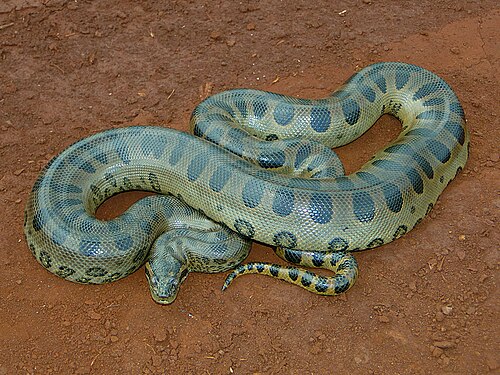
cobra snake sucuri verde rio pardo constritora anaconda Eunectes murinus
Photo: MKAMPIS · CC BY-SA 4.0 · Wikimedia Commons Source
Green Anaconda
Eunectes murinus (Green Anaconda · オオアナコンダ)
💡 Everyday Comparisons for Size, Mass & Speed
- 📏 Length 5.2m — ~1.1× the length of a mid-size sedan (4.9 m)
- ⚖️ Mass 97kg — ~1.4× the mass of a 70 kg adult human
- ⚡ Speed 16km/h — ~4× human walking speed (~4 km/h)
Reference standards: coach bus ~12 m, mid-size car ~4.9 m, compact car ~1 t, basketball hoop 3.05 m, credit card 8.56 cm.
Site-computed relative index from recorded values; not a formal scientific metric.
📖 1. Overview
The heaviest of all extant snakes. The largest reliably measured individual was a female about 5.2 m long and weighing about 97 kg (from a field study in Venezuela), while males are much smaller than females. Claims of individuals exceeding 8–9 m have never been verified by actual measurement.
🌐 Wikipedia Summary ExtractThe green anaconda is a species of snake in the family Boidae (boas). The species is native to northern South America. It is one of the longest and heaviest known extant snake species. Like all boas, it is a non-venomous constrictor. The green anaconda generally has a life expectancy of ten years in the wild, although some specimens live longer when taken care of in captivity. The green anaconda lives in tropical rainforests and tends to prefer shallow, slow-moving waters, such as streams, rivers, and flooded grasslands. It spends most of its time in the water but is also found on land in thick vegetation.
🦴 2. Anatomy & Morphology
Non-venomous, it instead wraps its thick muscular body—reaching 25–30 cm in diameter—around prey and squeezes with powerful constriction pressure that stops heartbeat and blood flow.
🔍 3. Ecology & Behavior
With eyes and nostrils positioned on top of its head, it hides its entire body underwater like a crocodile and ambushes capybaras, deer, and caimans at the water's surface.
🇰🇷 4. Connection to Korea
It is a prime model for the ecology of large reptiles in tropical wetlands.
📚 Sources & References
- • Rivas, J. A. (2000). The life history of the green anaconda (Eunectes murinus), with emphasis on its reproductive biology. PhD dissertation, University of Tennessee — largest measured female about 5.2 m, 97.5 kg
- • Wikipedia “Green anaconda”
- • Wikidata Q207347
- • IUCN Red List category LC — latest assessment at iucnredlist.org
- • nationalzoo.si.edu — green-anaconda
- • Silhouette: PhyloPic — author not recorded · CC0 1.0
Recorded dimensions are widely cited representative estimates from public literature and may vary by study or specimen.