 📸 Photo
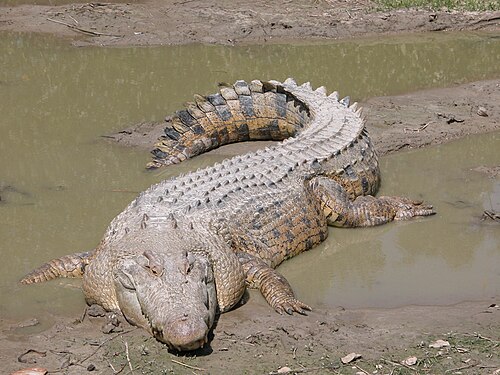
Saltwater Crocodile ( Crocodylus porosus )This is Maximo, a 15'+ crocodile at the St. Augustine Alligator Farm.
Photo: Obtained from Molly Ebersold of the St. Augustine Alligator Farm · Public domain · Wikimedia Commons Source
Saltwater Crocodile
Crocodylus porosus (Saltwater Crocodile · イリエワニ)
💡 Everyday Comparisons for Size, Mass & Speed
- 📏 Length 6m — ~1.2× the length of a mid-size sedan (4.9 m)
- ⚖️ Mass 1t — ~14.3× the mass of a 70 kg adult human
- ⚡ Speed 29km/h — ~0.8× Usain Bolt's 100 m world-record average speed (37.6 km/h)
Reference standards: coach bus ~12 m, mid-size car ~4.9 m, compact car ~1 t, basketball hoop 3.05 m, credit card 8.56 cm.
Site-computed relative index from recorded values; not a formal scientific metric.
📖 1. Overview
The largest extant reptile at over 6 m in length and over 1 ton in weight, and a predator officially recognized as having the strongest jaw power among living animals with a measured bite force of 16,460 N.
🌐 Wikipedia Summary ExtractThe saltwater crocodile is a crocodilian native to saltwater habitats, brackish wetlands and freshwater rivers from India's east coast across Southeast Asia and the Sundaland to northern Australia and Micronesia. It has been listed as Least Concern on the IUCN Red List since 1996. It was hunted for its skin throughout its range up to the 1970s, and is threatened by illegal killing and habitat loss. It is regarded as dangerous to humans.
🦴 2. Anatomy & Morphology
Equipped with salt glands and a sophisticated 4-chambered heart bypass valve system, it ambushes underwater for over 1 hour before biting prey and executing a spinning 'death roll.'
🔍 3. Ecology & Behavior
It is a living fossil that diverged from Archosauria alongside dinosaurs and survived mass extinction.
🇰🇷 4. Connection to Korea
Ancient crocodyliform fossils have also been discovered in the Cretaceous Hasandong Formation of the Korean Peninsula, demonstrating links to Mesozoic river ecosystems in Korea.
📚 Sources & References
- • Wikipedia “Saltwater crocodile”
- • Wikidata Q182599
- • IUCN Red List category LC — latest assessment at iucnredlist.org
- • animaldiversity.org — Crocodylus porosus
- • Silhouette: PhyloPic — Matthew Speight · CC0 1.0 (Congeneric silhouette — Crocodylus suchus)
Recorded dimensions are widely cited representative estimates from public literature and may vary by study or specimen.