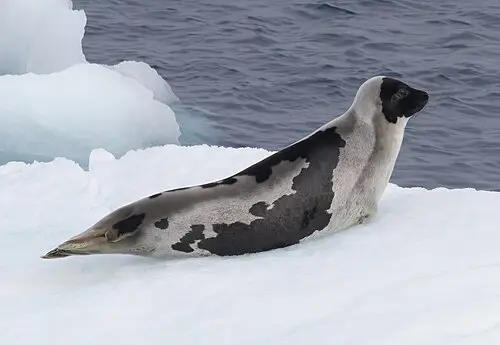
 📸 Photo
Photo: Brian Gratwicke from DC, USA · CC BY 2.0 · Wikimedia Commons Source
Harp Seal
Pagophilus groenlandicus (Harp Seal · タテゴトアザラシ)
💡 Everyday Comparisons for Size, Mass & Speed
- 💡 A body length of 2 m equals the length of a single bed (Comparison).
- 💡 A weight of 135 kg is about 13–14 ten-kilogram bags of rice (Comparison).
- 💡 In Canada, tourists visit harp seal whelping grounds, while demand for its fur, oil, and meat has dropped sharply due to import regulations (ADW).
Reference standards: coach bus ~12 m, mid-size car ~4.9 m, compact car ~1 t, basketball hoop 3.05 m, credit card 8.56 cm.
Site-computed relative index from recorded values; not a formal scientific metric.
📖 1. Overview
The Harp Seal is an Arctic seal living near pack ice whose pups are born in white fur and called "whitecoats." It migrates up to 5,000 km a year.
🦴 2. Anatomy & Morphology
Pups are born with white embryonic fur that sheds in patches after about 3 weeks, giving way to a silvery-white coat with irregular black spots. Adults have light gray fur with a black face mask and a curved black harp-shaped band on the back.
🔍 3. Ecology & Behavior
It feeds on more than 130 species of fish and invertebrates, typically diving 150–200 m for 4–13 minutes. Thousands gather on pack ice during the breeding and molting seasons, while spending most of the rest of the year alone.
🇰🇷 4. Connection to Korea
No direct record connecting this species to Korea has been found.
📚 Sources & References
- • IUCN Red List NT (2025) — https://www.iucnredlist.org/species/41671/280391816
- • IUCN Red List category NT — latest assessment at iucnredlist.org
- • mammaldiversity.org — 1005924
- • iucnredlist.org — 280391816
- • wikidata.org — Q209324
- • commons.wikimedia.org — File:Harp Seal (Pagophilus groenlandicus), Greenland Sea IMG
- • animaldiversity.org — Pagophilus groenlandicus
- • fisheries.noaa.gov — harp-seal
- • Silhouette: PhyloPic — Margot Michaud · CC0 1.0
Recorded dimensions are widely cited representative estimates from public literature and may vary by study or specimen.