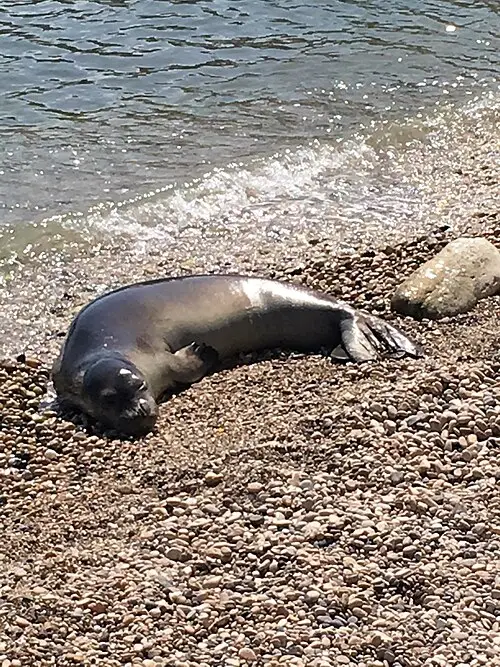
 📸 Photo
Photo: Atsoukali · CC BY-SA 4.0 · Wikimedia Commons Source
Mediterranean Monk Seal
Monachus monachus (Mediterranean Monk Seal · チチュウカイモンクアザラシ)
💡 Everyday Comparisons for Size, Mass & Speed
- 💡 An average body length of 2.4 m is slightly longer than a single bed (about 2 m) (Comparison).
- 💡 A weight of 315 kg is about 31 bags of 10 kg rice (Comparison).
- 💡 In the past, people hunted it for food and for its skin and body parts, which were believed to ward off various ailments and used as medicine (ADW).
Reference standards: coach bus ~12 m, mid-size car ~4.9 m, compact car ~1 t, basketball hoop 3.05 m, credit card 8.56 cm.
Site-computed relative index from recorded values; not a formal scientific metric.
📖 1. Overview
The Mediterranean Monk Seal is a rare seal living along island coasts and other shores of the Mediterranean. Long persecuted by humans, it now gives birth in remote sea caves.
🦴 2. Anatomy & Morphology
Adult coloration varies from dark brown or black to pale gray, with a mostly pale gray belly. Pups are born with fluffy black fur and a white or yellowish belly patch, molting into a silvery-gray coat at about 4–6 weeks.
🔍 3. Ecology & Behavior
In shallow coastal waters it feeds on eels, sardines, tuna, flatfish, mullets, and octopuses. After a gestation of about 11 months, pups are born measuring 80–100 cm and weighing 17–24 kg, and mothers stay with their pups for up to 6 weeks while living off stored fat.
🇰🇷 4. Connection to Korea
No direct record connecting this species to Korea has been found.
📚 Sources & References
- • IUCN Red List VU (2023) — https://www.iucnredlist.org/species/13653/238637039
- • IUCN Red List category VU — latest assessment at iucnredlist.org
- • mammaldiversity.org — 1005920
- • iucnredlist.org — 238637039
- • wikidata.org — Q208549
- • commons.wikimedia.org — File:Billy monk seal 2.jpg
- • animaldiversity.org — Monachus monachus
- • fisheries.noaa.gov — mediterranean-monk-seal
- • Silhouette: PhyloPic — Narimane Chatar · CC BY 4.0
Recorded dimensions are widely cited representative estimates from public literature and may vary by study or specimen.