 📸 Photo
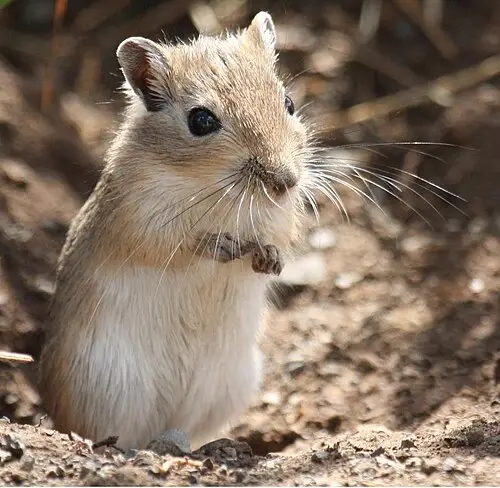
Photo: Meriones_unguiculatus_1.jpg : Alastair Rae from London, United Kingdom derivative work: Berichard ( talk ) · CC BY-SA 2.0 · Wikimedia Commons Source
Mongolian Jird
Meriones unguiculatus (Mongolian Jird · スナネズミ)
💡 Everyday Comparisons for Size, Mass & Speed
- 💡 Its maximum weight of 133 g is about two eggs (about 60 g each), and its body length of 12 cm is slightly shorter than a ballpoint pen (Comparison).
- 💡 It is both a laboratory animal and a popular pet. The oldest recorded pet gerbil was an individual kept in the United Kingdom in 1961 (Animal Diversity Web).
Reference standards: coach bus ~12 m, mid-size car ~4.9 m, compact car ~1 t, basketball hoop 3.05 m, credit card 8.56 cm.
Site-computed relative index from recorded values; not a formal scientific metric.
📖 1. Overview
The Mongolian Jird (gerbil) is a small rodent living in the dry lands of Inner Mongolia with an extreme climate, digging burrows in family groups.
🦴 2. Anatomy & Morphology
Its fur is thin with gray roots, yellow shafts, and black tips, and its underside is white. Its claws are hairless, showing pinkish-white skin, and males are slightly larger than females.
🔍 3. Ecology & Behavior
It eats mugwort most heavily along with grass seeds, conserving water and fat by producing concentrated urine and dry feces. A family group usually numbers around 20 individuals led by the largest male.
🇰🇷 4. Connection to Korea
No direct record connecting this species to Korea has been found.
📚 Sources & References
- • IUCN Red List LC (2016) — https://www.iucnredlist.org/species/13171/115110851
- • IUCN Red List category LC — latest assessment at iucnredlist.org
- • mammaldiversity.org — 1002969
- • iucnredlist.org — 115110851
- • wikidata.org — Q649817
- • commons.wikimedia.org — File:Meriones unguiculatus 2.jpg
- • animaldiversity.org — Meriones unguiculatus
- • Silhouette: PhyloPic — Daniel Stadtmauer · CC0 1.0
Recorded dimensions are widely cited representative estimates from public literature and may vary by study or specimen.