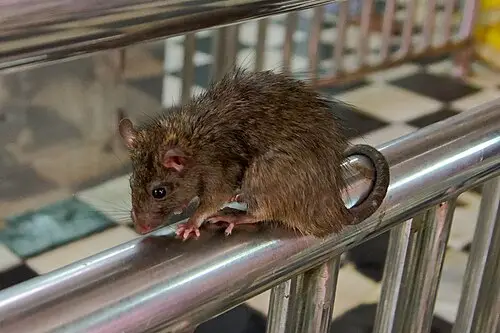
 📸 Photo
Photo: Jakub Hałun · CC BY-SA 4.0 · Wikimedia Commons Source
Roof Rat
Rattus rattus (Roof Rat · クマネズミ)
💡 Everyday Comparisons for Size, Mass & Speed
- 💡 Its maximum weight of 300 g is about five eggs (about 60 g each), and its head-and-body length of 22 cm is slightly longer than the short side of an A4 sheet of paper (21 cm) (Comparison).
- 💡 Its daily water intake of 15 mL equals one tablespoon (Comparison). Animal Diversity Web notes that this species has no known benefits for humans.
Reference standards: coach bus ~12 m, mid-size car ~4.9 m, compact car ~1 t, basketball hoop 3.05 m, credit card 8.56 cm.
Site-computed relative index from recorded values; not a formal scientific metric.
📖 1. Overview
The Roof Rat is a medium-sized rat that spread to coasts worldwide aboard ships, and because it climbs well, it often lives on upper floors of buildings.
🦴 2. Anatomy & Morphology
Its ears are relatively large and its tail is almost always longer than its body. Its coat is often black, though white, gray, and other colors also occur, with a paler belly.
🔍 3. Ecology & Behavior
It feeds mainly on fruits, grains, and vegetation, eating insects when needed. It consumes about 15 g of food and 15 mL of water a day, is active mainly at night, and can cause severe damage to farms by gnawing and fouling food.
🇰🇷 4. Connection to Korea
No direct record connecting this species to Korea has been found.
📚 Sources & References
- • IUCN Red List LC (2021) — https://www.iucnredlist.org/species/19360/192565917
- • IUCN Red List category LC — latest assessment at iucnredlist.org
- • mammaldiversity.org — 1003659
- • iucnredlist.org — 192565917
- • wikidata.org — Q106133
- • commons.wikimedia.org — File:20191212 Szczury w Świątyni Karni Maty w Deśnok 1038 81
- • animaldiversity.org — Rattus rattus
- • Silhouette: PhyloPic — Kawinwit Kittipalawattanapol · CC0 1.0
Recorded dimensions are widely cited representative estimates from public literature and may vary by study or specimen.