 📸 Photo
Photo: Katuuya · CC BY-SA 3.0 · Wikimedia Commons Source
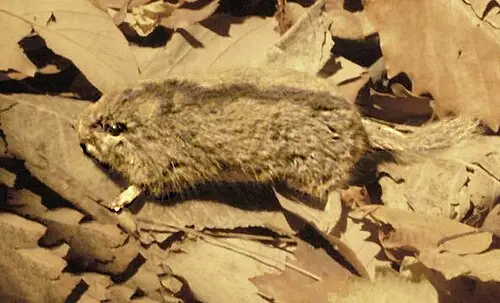
Japanese Dormouse
Glirulus japonicus (Japanese Dormouse · ヤマネ)
💡 Everyday Comparisons for Size, Mass & Speed
- 💡 Its maximum weight of 40 g is about five Korean 500-won coins (about 7.7 g each), and its head-and-body length of 13.5 cm is similar to the length of a ballpoint pen (Comparison).
- 💡 Animal Diversity Web notes that because it is an avid insect hunter, it helps reduce locust swarms that damage Japanese agriculture.
Reference standards: coach bus ~12 m, mid-size car ~4.9 m, compact car ~1 t, basketball hoop 3.05 m, credit card 8.56 cm.
Site-computed relative index from recorded values; not a formal scientific metric.
📖 1. Overview
The Japanese Dormouse is a small arboreal dormouse living in the forests of Japan, looking like a cross between a mouse and a squirrel.
🦴 2. Anatomy & Morphology
It has soft hazel-brown fur with a black stripe down the middle of its back and tufts of hair in front of its ears. Its tail is bushy and flattened, and soft foot pads allow it to run upside down along the underside of branches.
🔍 3. Ecology & Behavior
Active alone in the trees at night, it eats seeds, fruits, insects, and bird eggs, weaves nests out of moss and bark, and enters a long hibernation during cold months.
🇰🇷 4. Connection to Korea
No direct record connecting this species to Korea has been found.
📚 Sources & References
- • IUCN Red List LC (2016) — https://www.iucnredlist.org/species/9246/22222495
- • IUCN Red List category LC — latest assessment at iucnredlist.org
- • mammaldiversity.org — 1001505
- • iucnredlist.org — 22222495
- • wikidata.org — Q1422952
- • commons.wikimedia.org — File:Glirulus japonicus.jpg
- • animaldiversity.org — Glirulus japonicus
- • Silhouette: PhyloPic — author not recorded · Public Domain Mark 1.0 (Related taxon silhouette — Leithiinae)
Recorded dimensions are widely cited representative estimates from public literature and may vary by study or specimen.