 📸 Photo
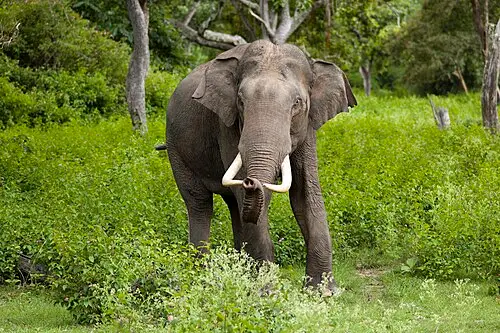
Photo: Yathin S Krishnappa · CC BY-SA 3.0 · Wikimedia Commons Source
Asian Elephant
Elephas maximus (Asian Elephant · アジアゾウ)
💡 Everyday Comparisons for Size, Mass & Speed
- 💡 Because it eats 10% of its body weight, a 6-ton elephant eats about 600 kg a day—the equivalent of thirty 20 kg bags of rice (Comparison).
- 💡 Its fondness for bananas and sugarcane often brings it into conflict with farmers (Smithsonian's National Zoo).
- 💡 Historically used by armies to carry supplies and soldiers, it now provides power in logging, religious ceremonies, and tourism.
Reference standards: coach bus ~12 m, mid-size car ~4.9 m, compact car ~1 t, basketball hoop 3.05 m, credit card 8.56 cm.
Site-computed relative index from recorded values; not a formal scientific metric.
📖 1. Overview
The Asian Elephant is a large elephant living in Asia, slightly smaller than the African elephant.
🦴 2. Anatomy & Morphology
Its skin is gray, with sparse hair in adults and thicker brown hair in calves. Its long trunk is used to grasp food, males have tusks formed from elongated second upper incisors, and males are much larger than females.
🔍 3. Ecology & Behavior
It feeds on over 100 plant species, including bamboo, sugarcane, roots, bark, and fruits, spending 12–18 hours a day foraging and eating 10% of its body weight daily. A strong swimmer, it can submerge completely with only its trunk above water.
🇰🇷 4. Connection to Korea
No direct record connecting this species to Korea has been found.
📚 Sources & References
- • IUCN Red List EN (2020) — https://www.iucnredlist.org/species/7140/45818198
- • IUCN Red List category EN — latest assessment at iucnredlist.org
- • mammaldiversity.org — 1000521
- • iucnredlist.org — 45818198
- • wikidata.org — Q133006
- • commons.wikimedia.org — File:Elephas maximus (Bandipur).jpg
- • animaldiversity.org — Elephas maximus
- • nationalzoo.si.edu — asian-elephant
- • Silhouette: PhyloPic — T. Michael Keesey · CC BY 3.0
Recorded dimensions are widely cited representative estimates from public literature and may vary by study or specimen.