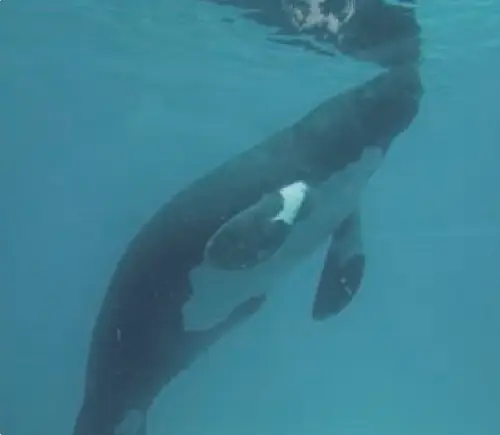
 📸 Photo
Photo: Fábia Luna/ICMBioCMA · CC BY-SA 4.0 · Wikimedia Commons Source
Amazonian Manatee
Trichechus inunguis (Amazonian Manatee · アマゾンマナティー)
💡 Everyday Comparisons for Size, Mass & Speed
- 💡 At 8% of an average body weight of 480 kg, it eats up to about 38 kg a day—nearly two 20 kg bags of rice worth of plants (Comparison).
- 💡 In captivity, it eats 9–15 kg of leafy vegetables a day.
- 💡 Since ancient times, it has been a food source for many Indigenous peoples.
Reference standards: coach bus ~12 m, mid-size car ~4.9 m, compact car ~1 t, basketball hoop 3.05 m, credit card 8.56 cm.
Site-computed relative index from recorded values; not a formal scientific metric.
📖 1. Overview
The Amazonian Manatee is a manatee that lives exclusively in the freshwaters of the Amazon River and its lakes.
🦴 2. Anatomy & Morphology
Its body is gray with a white patch on the chest and covered in fine hairs. Thick bristles grow on its upper and lower lips. The largest recorded individual was a male measuring 2.8 m.
🔍 3. Ecology & Behavior
It eats aquatic plants such as grasses, water lettuce, and water hyacinths, as well as floating palm fruits. It eats up to 8% of its body weight per day and grazes on new plants in flooded areas during the wet season. Today, groups of 4–8 individuals are most common.
🇰🇷 4. Connection to Korea
No direct record connecting this species to Korea has been found.
📚 Sources & References
- • IUCN Red List VU (2016) — https://www.iucnredlist.org/species/22102/43793736
- • IUCN Red List category VU — latest assessment at iucnredlist.org
- • mammaldiversity.org — 1000531
- • iucnredlist.org — 43793736
- • wikidata.org — Q456206
- • commons.wikimedia.org — File:Trichechus inunguis (Peixe-boi amazônico) por Fábia Lun
- • animaldiversity.org — Trichechus inunguis
- • Silhouette: PhyloPic — Flurin Leugger · CC BY 4.0 (Congeneric silhouette — Trichechus)
Recorded dimensions are widely cited representative estimates from public literature and may vary by study or specimen.