 📸 Photo
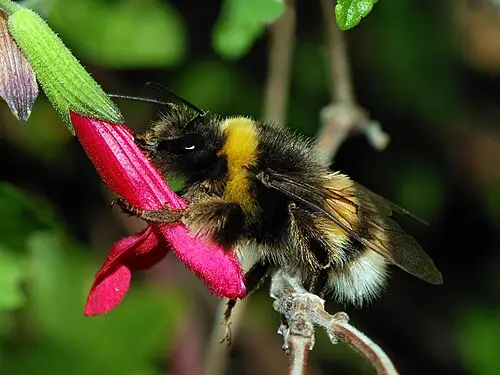
Photo: Alvesgaspar · CC BY-SA 3.0 · Wikimedia Commons Source
Buff-tailed bumblebee
Bombus terrestris (Buff-tailed bumblebee · セイヨウオオマルハナバチ)
Not Evaluated (NE) on the IUCN Red List yet.
💡 Everyday Comparisons for Size, Mass & Speed
- 💡 Farms growing tomatoes and fruit use commercial nests (UK BWARS).
- 💡 It is commonly seen in gardens and parks, and in warm cities workers can be seen gathering food from winter flowers such as mahonia even in winter (UK Bumblebee Conservation Trust).
Reference standards: coach bus ~12 m, mid-size car ~4.9 m, compact car ~1 t, basketball hoop 3.05 m, credit card 8.56 cm.
📖 1. Overview
The buff-tailed bumblebee is a common bumblebee in gardens, parks, and fields in the United Kingdom, and it is widely distributed across Europe, northern Asia, and the mountains of North Africa. Individuals that escaped from commercial nests have established themselves in Australasia (such as New Zealand) and South America.
🦴 2. Anatomy & Morphology
It is a large bumblebee with golden bands on the front of the thorax and the middle of the abdomen. Queens have a buff-colored tail while workers and males have a white tail, and its short tongue makes it difficult to sip nectar from long, tube-shaped flowers.
🔍 3. Ecology & Behavior
It nests underground in old mouse burrows, and a nest can grow large enough to hold from 350 to over 500 workers. It gathers pollen and nectar from a wide variety of flowers; queens emerge first in early spring, and in warm regions workers also forage on flowers during winter.
🇰🇷 4. Connection to Korea
No direct record connecting this species to Korea has been found.
📚 Sources & References
- • IUCN Red List: not evaluated (NE) — cross-checked with the Wikidata conservation-status entry
- • catalogueoflife.org — MFWK
- • wikidata.org — Q752274
- • commons.wikimedia.org — File:Bumblebee October 2007-3a.jpg
- • bumblebeeconservation.org — buff-tailed-bumblebee
- • bwars.com — bombus-terrestris
- • Silhouette: PhyloPic — Ferran Sayol · CC0 1.0
Recorded dimensions are widely cited representative estimates from public literature and may vary by study or specimen.