 📸 Photo
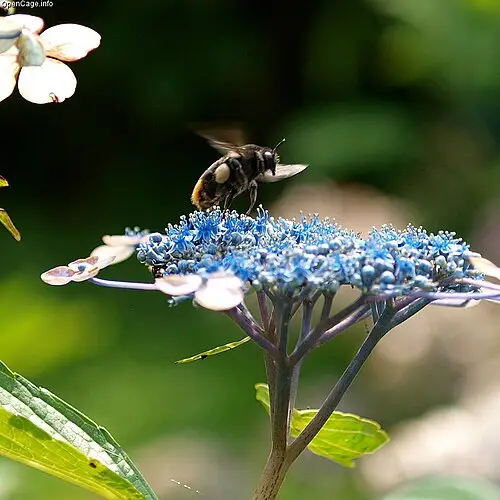
Photo: Daiju Azuma · CC BY 2.5 · Wikimedia Commons Source
Fiery-tailed bumble bee
Bombus ignitus (Fiery-tailed bumble bee · クロマルハナバチ)
Not Evaluated (NE) on the IUCN Red List yet.
💡 Everyday Comparisons for Size, Mass & Speed
- 💡 Its body length of 2.3 cm is slightly smaller than the diameter of a 500-won coin (2.65 cm).
- 💡 Because worker bees visit flowers from late May to early October, they can be encountered in flower beds from spring through autumn (National List of Species of Korea).
Reference standards: coach bus ~12 m, mid-size car ~4.9 m, compact car ~1 t, basketball hoop 3.05 m, credit card 8.56 cm.
📖 1. Overview
The fiery-tailed bumble bee (Bombus ignitus) is a bumble bee inhabiting the entire Korean Peninsula, appearing in both plains and mountains but more common in mountainous areas. Globally, it is distributed in Japan and northeastern China.
🦴 2. Anatomy & Morphology
Body length is 17 to 23 mm. Females have black hair all over the body with reddish-brown hair from the 3rd abdominal segment backward, while males are covered all over in bright yellow hair.
🔍 3. Ecology & Behavior
Females emerge from mid-April, gather dry leaves in burrows dug by mice or moles, and build hexagonal wax cells on top to lay eggs. Workers visit flowers from late May to early October, and males appear from early September to early October.
🇰🇷 4. Connection to Korea
It inhabits the entire Korean Peninsula (National List of Species of Korea).
📚 Sources & References
- • IUCN Red List: not evaluated (NE) — cross-checked with the Wikidata conservation-status entry
- • catalogueoflife.org — MFL9
- • 국가생물종목록(국립생물자원관) ktsn 120000027392 — https://species.nibr.go.kr/home/mainHome.do?cont_link=009&subMenu=009002&contCd=009002&ktsn=120000027392
- • wikidata.org — Q870370
- • commons.wikimedia.org — File:Bombus ignitus.jpg
- • species.nibr.go.kr — mainHome.do
- • Silhouette: PhyloPic — Arnstein Staverløkk/Norsk institutt for naturforskning · CC BY 4.0 (Congeneric silhouette — Bombus wurflenii)
Recorded dimensions are widely cited representative estimates from public literature and may vary by study or specimen.