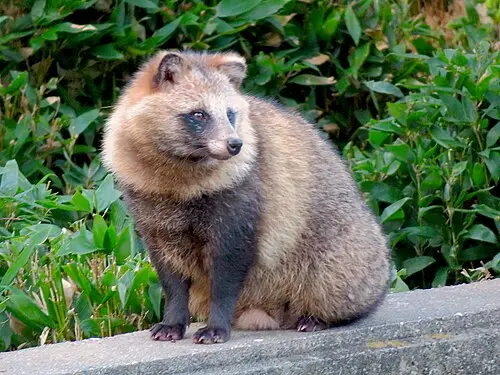
 📸 Photo
Photo: KKPCW · CC BY-SA 4.0 · Wikimedia Commons Source
Japanese Raccoon Dog
Nyctereutes viverrinus (Japanese Raccoon Dog · タヌキ)
Not Evaluated (NE) on the IUCN Red List yet.
💡 Everyday Comparisons for Size, Mass & Speed
- 💡 A maximum weight of 10 kg equals a 10 kg bag of rice, and a body length of about 68 cm is about twice the long side of an A4 sheet of paper (29.7 cm) (Comparison).
- 💡 Raccoon dog fur is used for stoles, collars, and fur coats (ADW), and in Japan the animal is familiarly known as "tanuki."
Reference standards: coach bus ~12 m, mid-size car ~4.9 m, compact car ~1 t, basketball hoop 3.05 m, credit card 8.56 cm.
Site-computed relative index from recorded values; not a formal scientific metric.
📖 1. Overview
The Japanese Raccoon Dog is a raccoon dog living in Japan. Because ADW groups raccoon dogs into a single species (Nyctereutes procyonoides) that includes Japan in its native range, the figures here represent species-level data.
🦴 2. Anatomy & Morphology
It is a small fox-like canid with facial and coat markings similar to those of a raccoon, standing 38–51 cm tall.
🔍 3. Ecology & Behavior
An opportunistic omnivore, it hunts insects, small rodents, amphibians, birds, and eggs. Depending on the region, it hibernates from November to early spring, though not in the southernmost areas; gestation lasts 59–64 days and litters average 5–7 young.
🇰🇷 4. Connection to Korea
No direct record connecting this species to Korea has been found.
📚 Sources & References
- • IUCN Red List: not evaluated (NE) — cross-checked with the Wikidata conservation-status entry
- • mammaldiversity.org — 1005962
- • wikidata.org — Q122835073
- • commons.wikimedia.org — File:Tanuki in Higashiyama Zoo - 2.jpg
- • animaldiversity.org — Nyctereutes procyonoides
- • Silhouette: PhyloPic — author not recorded · Public Domain Mark 1.0 (Congeneric silhouette — Nyctereutes procyonoides)
Recorded dimensions are widely cited representative estimates from public literature and may vary by study or specimen.