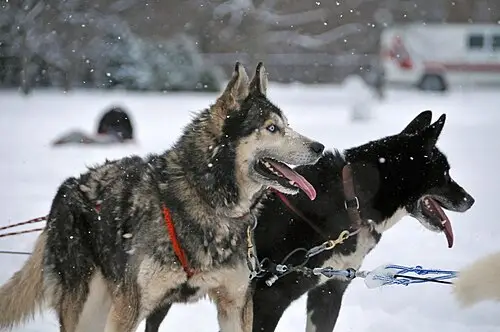
 📸 Photo
Photo: M. Rehemtulla · CC BY 2.0 · Wikimedia Commons Source
Domestic Dog
Canis familiaris (Domestic Dog · カニス・ファミリアリス)
Not Evaluated (NE) on the IUCN Red List yet.
💡 Everyday Comparisons for Size, Mass & Speed
- 💡 The largest breeds weigh 70 kg, similar to an adult human, while the smallest breeds are lighter than a 1.5 L bottle of water (Comparison).
- 💡 When properly trained and cared for, dogs become loyal, protective companions loved as pets (ADW). In less developed regions, however, they are a major vector of rabies, making vaccination essential.
Reference standards: coach bus ~12 m, mid-size car ~4.9 m, compact car ~1 t, basketball hoop 3.05 m, credit card 8.56 cm.
Site-computed relative index from recorded values; not a formal scientific metric.
📖 1. Overview
The domestic dog is a quintessential companion animal living alongside humans everywhere in the world. ADW classifies the dog as a subspecies of the wolf (Canis lupus familiaris).
🦴 2. Anatomy & Morphology
Dogs vary remarkably in shape and size, ranging from breeds weighing under 1 kg to breeds weighing around 70 kg.
🔍 3. Ecology & Behavior
An omnivore that eats both meat and plant matter, puppies require twice the protein and 50% more calories per unit of body weight. Gestation averages 63 days (about 9 weeks), with litters usually numbering 3–9 puppies.
🇰🇷 4. Connection to Korea
No direct record connecting this species to Korea has been found.
📚 Sources & References
- • IUCN Red List: not evaluated (NE) — cross-checked with the Wikidata conservation-status entry
- • mammaldiversity.org — 1005940
- • wikidata.org — Q20717272
- • commons.wikimedia.org — File:Huskiesatrest.jpg
- • animaldiversity.org — Canis lupus familiaris
- • Silhouette: PhyloPic — Caleb M. Gordon · CC0 1.0
Recorded dimensions are widely cited representative estimates from public literature and may vary by study or specimen.