 📸 Photo
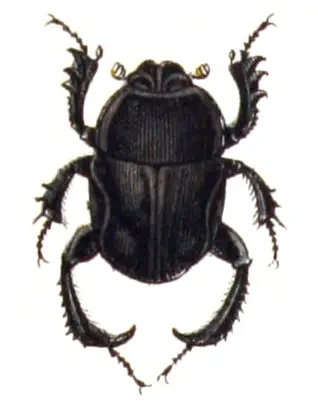
Photo: Emil Hochdanz · Public domain · Wikimedia Commons Source
Gymnopleurus mopsus
Gymnopleurus mopsus (Gymnopleurus mopsus · Gymnopleurus mopsus)
Not Evaluated (NE) on the IUCN Red List yet.
🇰🇷 Class II endangered wildlife (Korea)
💡 Everyday Comparisons for Size, Mass & Speed
- 💡 Its maximum body length of 16 mm is slightly smaller than the diameter of a Korean 10-won coin (18 mm) (Comparison).
- 💡 Declines in open grazing of cattle and horses, heavy pesticide use, and changes in livestock farming practices are cited as reasons for its disappearance. In nature, it served to clean up cow dung in pasture grasslands.
Reference standards: coach bus ~12 m, mid-size car ~4.9 m, compact car ~1 t, basketball hoop 3.05 m, credit card 8.56 cm.
📖 1. Overview
Gymnopleurus mopsus is a dung beetle that rolls the dung of large herbivores such as cattle, horses, and sheep and carries it into underground burrows. In Korea, it is a Class II endangered wildlife (Korea) presumed to have disappeared in the 1970s.
🦴 2. Anatomy & Morphology
Its body is 10–16 mm long and matte black, with a large, flat, circular pronotum. There are 3 large teeth near the tip of the forelegs, and the tarsi are very small.
🔍 3. Ecology & Behavior
Adults are active from late spring to autumn and are most numerous in June and July. They roll animal dung into underground burrows to lay eggs, playing a role in decomposing dung and keeping soil clean.
🇰🇷 4. Connection to Korea
It is a Class II endangered wildlife (Korea). In the past it lived throughout North and South Korea, including Jeju Island, but is presumed to have gone locally extinct in Korea in the 1970s.
📚 Sources & References
- • 멸종위기 야생생물 Ⅱ급 — 국가생물종목록(국립생물자원관) ktsn 120000212951 — https://species.nibr.go.kr/home/mainHome.do?cont_link=009&subMenu=009002&contCd=009002&ktsn=120000212951
- • IUCN Red List: not evaluated (NE) — cross-checked with the Wikidata conservation-status entry
- • Korean protection status: Class II endangered wildlife (Korea)
- • catalogueoflife.org — 3HTNT
- • 국가생물종목록(국립생물자원관) ktsn 120000212951 — https://species.nibr.go.kr/home/mainHome.do?cont_link=009&subMenu=009002&contCd=009002&ktsn=120000212951
- • wikidata.org — Q14894828
- • commons.wikimedia.org — File:Gymnopleurus.mopsus.-.calwer.21.01.jpg
- • nie.re.kr — view.do
- • bok.or.kr — contents.do
- • Silhouette: PhyloPic — Edwin Price · CC BY 4.0 (Related taxon silhouette — Hylamorpha elegans)
Recorded dimensions are widely cited representative estimates from public literature and may vary by study or specimen.