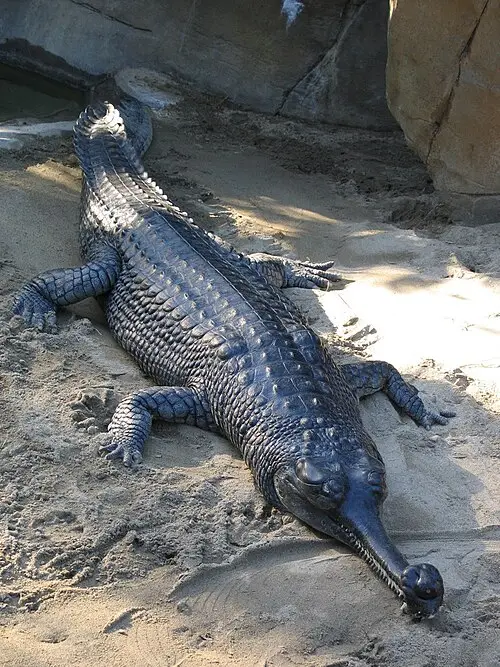
 📸 Photo
Photo: Bo Link from Knoxville, TN, USA · CC BY 2.0 · Wikimedia Commons Source
Gharial
Gavialis gangeticus (Gharial · インドガビアル)
💡 Everyday Comparisons for Size, Mass & Speed
- 💡 A male's length of 6 m is over 1 m longer than a mid-sized passenger car (about 4.9 m) (Comparison).
- 💡 Once found across the Indus, Ganges, Mahanadi, and Brahmaputra river systems, it has vanished from much of its range, leaving only fragmented populations in Nepal and northern India.
Reference standards: coach bus ~12 m, mid-size car ~4.9 m, compact car ~1 t, basketball hoop 3.05 m, credit card 8.56 cm.
Site-computed relative index from recorded values; not a formal scientific metric.
📖 1. Overview
The Gharial is a crocodile living in rivers of northern India with an extremely long, slender snout specialized for catching fish.
🦴 2. Anatomy & Morphology
Males grow to 5–6 m in length, and the snout becomes proportionally longer as they grow. Eggs average about 160 g.
🔍 3. Ecology & Behavior
Juveniles eat insects, crustaceans, and frogs, whereas adults eat almost exclusively fish. Adults bask and lay eggs on sandbars, while hatchlings stay in calm shallow waters near the shore.
🇰🇷 4. Connection to Korea
No direct record connecting this species to Korea has been found.
📚 Sources & References
- • IUCN Red List CR (2019) — https://www.iucnredlist.org/species/8966/149227430
- • IUCN Red List category CR — latest assessment at iucnredlist.org
- • catalogueoflife.org — 3FFQ3
- • iucnredlist.org — 149227430
- • wikidata.org — Q17134
- • commons.wikimedia.org — File:Gharial san diego.jpg
- • nationalzoo.si.edu — gharial
- • animaldiversity.org — Gavialis gangeticus
- • Silhouette: PhyloPic — Dan Folkes · CC BY 4.0
Recorded dimensions are widely cited representative estimates from public literature and may vary by study or specimen.