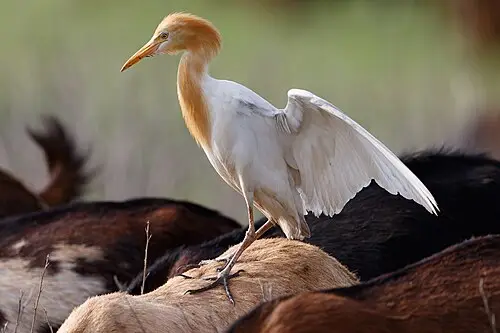
 📸 Photo
Photo: Hari K Patibanda · CC BY 2.0 · Wikimedia Commons Source
Eastern Cattle Egret
Ardea coromanda (Eastern Cattle Egret · アマサギ)
Not Evaluated (NE) on the IUCN Red List yet.
💡 Everyday Comparisons for Size, Mass & Speed
- 💡 Its average weight of 220 g is comparable to an apple (about 200–250 g).
- 💡 Because it follows cattle and horses to eat insects, some ranches rely on these birds rather than pesticides to reduce flies (Animal Diversity Web).
- 💡 Foraging beside livestock has been calculated to yield up to 50% more prey than hunting alone (Animal Diversity Web).
Reference standards: coach bus ~12 m, mid-size car ~4.9 m, compact car ~1 t, basketball hoop 3.05 m, credit card 8.56 cm.
Site-computed relative index from recorded values; not a formal scientific metric.
📖 1. Overview
The Eastern Cattle Egret is a medium-sized egret famous for foraging alongside livestock such as cattle, and is the best adapted of all herons to terrestrial habitats.
🦴 2. Anatomy & Morphology
It has a hunched posture and shorter neck and legs than other egrets. Adults are mostly white with a dull orange or yellow bill and legs, developing buff-orange plumes on the head, neck, and back during the breeding season.
🔍 3. Ecology & Behavior
It catches grasshoppers, crickets, flies, spiders, and frogs flushed out by walking livestock or large herbivores. It breeds in colonies with other herons and usually lays 3–4 eggs.
🇰🇷 4. Connection to Korea
No direct record connecting this species to Korea has been found.
📚 Sources & References
- • IUCN Red List: not evaluated (NE) — cross-checked with the Wikidata conservation-status entry
- • doi.org — avilist.v2026
- • wikidata.org — Q137507771
- • commons.wikimedia.org — File:A Cattle Egret Balancing on a Goat (50126917227).jpg
- • animaldiversity.org — Bubulcus ibis
- • Silhouette: PhyloPic — Giles Laurent · CC BY 4.0 (Congeneric silhouette — Ardea ibis)
Recorded dimensions are widely cited representative estimates from public literature and may vary by study or specimen.