 📸 Photo
Photo: Mgiganteus1 at English Wikipedia · CC BY-SA 3.0 · Wikimedia Commons Source
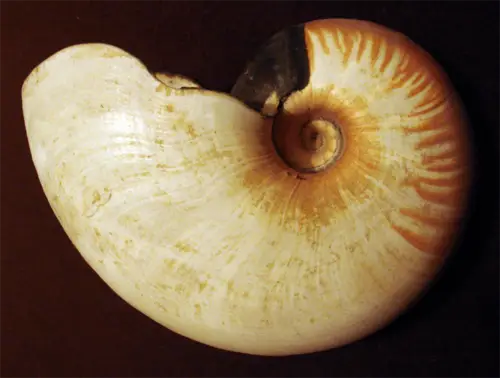
Crusty nautilus
Allonautilus scrobiculatus (Crusty nautilus · Crusty nautilus)
💡 Everyday Comparisons for Size, Mass & Speed
- 💡 Its shell diameter of 18 cm is slightly larger than the length of a smartphone (about 15 cm) (Comparison).
- 💡 The FAO cephalopod catalog of the world introduces this species as the rarest and most distinctive of all nautiluses.
Reference standards: coach bus ~12 m, mid-size car ~4.9 m, compact car ~1 t, basketball hoop 3.05 m, credit card 8.56 cm.
📖 1. Overview
The crusty nautilus is the rarest and most distinctive species among nautiluses, living in the tropical western Pacific off Papua New Guinea.
🦴 2. Anatomy & Morphology
Nautiluses live in the outermost chamber of a multi-chambered, pearly coiled shell. This species has a wrinkled, crusty outer layer on its shell, and its gills and male reproductive organs differ from those of other nautiluses.
🔍 3. Ecology & Behavior
It is a tropical benthic species. Empty shells that detach after death are known to drift as far as the Solomon Islands. The International Union for Conservation of Nature (IUCN) assessed it as Data Deficient (DD, 2024).
🇰🇷 4. Connection to Korea
No direct record connecting this species to Korea has been found.
📚 Sources & References
- • IUCN Red List DD (2024) — https://www.iucnredlist.org/species/163093/971858
- • IUCN Red List category DD — latest assessment at iucnredlist.org
- • marinespecies.org — aphia.php
- • iucnredlist.org — 971858
- • wikidata.org — Q644940
- • commons.wikimedia.org — File:Allonautilus scrobiculatus.png
- • fao.org — a0150e04.pdf
- • sealifebase.se — Allonautilus-scrobiculatus.html
- • Silhouette: PhyloPic — Antonov (vectorized by T. Michael Keesey) · Public Domain Mark 1.0 (Congeneric silhouette — Allonautilus)
Recorded dimensions are widely cited representative estimates from public literature and may vary by study or specimen.