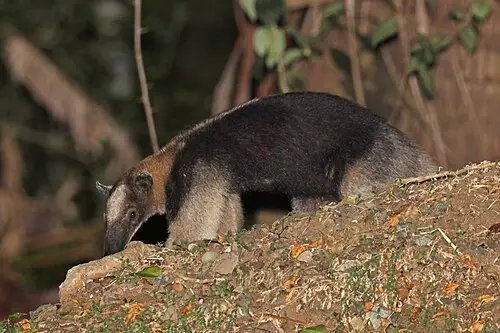
 📸 Photo
Photo: Charles J. Sharp · CC BY-SA 4.0 · Wikimedia Commons Source
Northern Tamandua
Tamandua mexicana (Northern Tamandua · キタコアリクイ)
💡 Everyday Comparisons for Size, Mass & Speed
- 💡 Its maximum weight of 7 kg is about 7 tenths of a 10 kg bag of rice, and its head-and-body length of 77 cm equals two and a half 30 cm rulers (Comparison).
- 💡 By eating large numbers of ants and termites, it helps keep down insects that can damage crops and orchards.
Reference standards: coach bus ~12 m, mid-size car ~4.9 m, compact car ~1 t, basketball hoop 3.05 m, credit card 8.56 cm.
Site-computed relative index from recorded values; not a formal scientific metric.
📖 1. Overview
The Northern Tamandua is an anteater of diverse forests and grasslands that spends more than half its time in trees and always wears a distinct black "V"-shaped vest marking on its back.
🦴 2. Anatomy & Morphology
Its body is fawn to brownish with a black vest marking running from shoulders to rump. On the ground it walks clumsily on the outsides of its hands so its large claws do not pierce its palms.
🔍 3. Ecology & Behavior
Using its sense of smell, it finds and eats tree-nesting ants and termites while avoiding ants that produce noxious chemical defenses. It can release a foul odor from its anal gland that earned it the nickname "stinker of the forest," and in Panama it has been seen swimming between islands.
🇰🇷 4. Connection to Korea
No direct record connecting this species to Korea has been found.
📚 Sources & References
- • IUCN Red List LC (2025) — https://www.iucnredlist.org/species/21349/210444990
- • IUCN Red List category LC — latest assessment at iucnredlist.org
- • mammaldiversity.org — 1000443
- • iucnredlist.org — 210444990
- • wikidata.org — Q839675
- • animaldiversity.org — Tamandua mexicana
- • Silhouette: PhyloPic — Margot Michaud · CC0 1.0
Recorded dimensions are widely cited representative estimates from public literature and may vary by study or specimen.