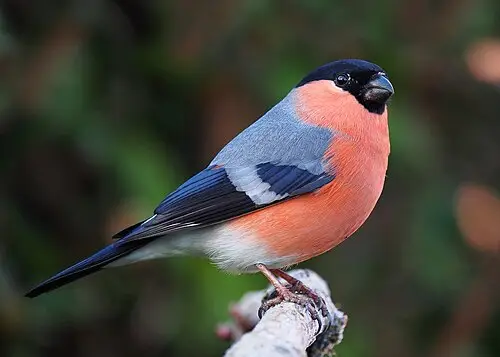
 📸 Photo
Photo: Francis Franklin · CC BY-SA 3.0 · Wikimedia Commons Source
Eurasian Bullfinch
Pyrrhula pyrrhula (Eurasian Bullfinch · ウソ)
💡 Everyday Comparisons for Size, Mass & Speed
- 💡 Its body length of 15 cm is similar to the length of a smartphone (about 15 cm) (Comparison).
- 💡 According to ADW, it eats buds of trees including fruit trees in spring, attacking buds only when seed supplies from the previous season run low.
Reference standards: coach bus ~12 m, mid-size car ~4.9 m, compact car ~1 t, basketball hoop 3.05 m, credit card 8.56 cm.
📖 1. Overview
The Eurasian Bullfinch is a small bird notable for the male's black cap and red cheeks and breast, breeding in northern Eurasia. Shy by nature, it stays hidden among trees.
🦴 2. Anatomy & Morphology
Its body length is 15 cm. Its head is black, its cheeks, throat, and upper breast are red, its back is gray, its belly is rosy pale gray, and its wingtips and tail are black. Females and juveniles are pinkish-gray.
🔍 3. Ecology & Behavior
It feeds mainly on tree buds in spring and seeds of various plants at other times, feeding chicks a mix of seeds and insects. From early May to mid-July, it builds a nest of fine twigs and moss and lays 4–5 eggs, breeding up to 2 times a year.
🇰🇷 4. Connection to Korea
The National List of Species of Korea notes that it is an uncommon winter visitor arriving irregularly across Korea.
📚 Sources & References
- • IUCN Red List LC (2018) — https://www.iucnredlist.org/species/22720671/132141969
- • IUCN Red List category LC — latest assessment at iucnredlist.org
- • doi.org — avilist.v2026
- • iucnredlist.org — 132141969
- • 국가생물종목록(국립생물자원관) ktsn 120000002206 — https://species.nibr.go.kr/home/mainHome.do?cont_link=009&subMenu=009002&contCd=009002&ktsn=120000002206
- • wikidata.org — Q25382
- • commons.wikimedia.org — File:Bullfinch male.jpg
- • species.nibr.go.kr — mainHome.do
- • animaldiversity.org — Pyrrhula pyrrhula
- • Silhouette: PhyloPic — Ferran Sayol · CC0 1.0
Recorded dimensions are widely cited representative estimates from public literature and may vary by study or specimen.