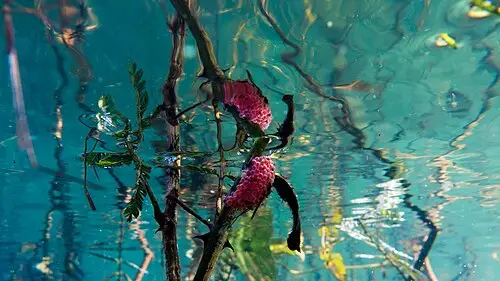
 📸 Photo
Photo: João D'Andretta · CC BY-SA 4.0 · Wikimedia Commons Source
Golden apple snail
Pomacea canaliculata (Golden apple snail · スクミリンゴガイ)
💡 Everyday Comparisons for Size, Mass & Speed
- 💡 Its full-grown length of 15 cm is half of a 30 cm ruler (Comparison).
- 💡 It was introduced for food in 1983 and was also used in eco-friendly farming (National List of Species of Korea).
- 💡 In parts of Asia such as China and Thailand, it is cooked and eaten (ADW positive impacts for humans).
Reference standards: coach bus ~12 m, mid-size car ~4.9 m, compact car ~1 t, basketball hoop 3.05 m, credit card 8.56 cm.
📖 1. Overview
The golden apple snail is a large freshwater snail native to South America that lives in rice paddies and puddles. It has now spread worldwide as a harmful invasive species that damages ecosystems.
🦴 2. Anatomy & Morphology
Its shell is globular and brown, black, or yellowish-brown, with white or golden individuals also occurring. The shell has 5–6 whorls and a deeply indented suture, which gave rise to the name 'channeled'.
🔍 3. Ecology & Behavior
It feeds on a very wide variety of items, including microscopic plants, aquatic plants, decaying matter, dead insects, and even other freshwater snails. It leaves the water at night in search of fresh plants and hides near the water's edge during the day, and the sexes are separate.
🇰🇷 4. Connection to Korea
It is listed on the National List of Species of Korea under the name Wang-ureongi (Korean name). It was brought in from Japan for food in 1983 and later used in eco-friendly rice farming, and it is a harmful invasive species named for being larger than native pond snails.
📚 Sources & References
- • IUCN Red List LC (2012) — https://www.iucnredlist.org/species/166261/1124485
- • IUCN Red List category LC — latest assessment at iucnredlist.org
- • catalogueoflife.org — 4LQ8R
- • iucnredlist.org — 1124485
- • 국가생물종목록(국립생물자원관) ktsn 120000043132 — https://species.nibr.go.kr/home/mainHome.do?cont_link=009&subMenu=009002&contCd=009002&ktsn=120000043132
- • wikidata.org — Q2005098
- • commons.wikimedia.org — File:Parque Nacional da Serra da Canastra João Paulo Marques
- • species.nibr.go.kr — mainHome.do
- • animaldiversity.org — Pomacea canaliculata
- • Silhouette: PhyloPic — Filippo Nicolini · CC BY 4.0 (Congeneric silhouette — Pomacea)
Recorded dimensions are widely cited representative estimates from public literature and may vary by study or specimen.