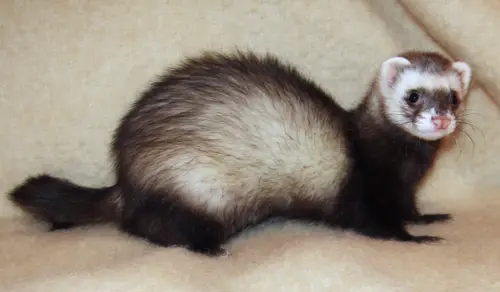
 📸 Photo
Photo: Alfredo Gutiérrez · CC BY-SA 4.0 · Wikimedia Commons Source
Domestic Ferret
Mustela furo (Domestic Ferret · フェレット)
Not Evaluated (NE) on the IUCN Red List yet.
💡 Everyday Comparisons for Size, Mass & Speed
- 💡 A male body length of 40.6 cm is about 1.4 times the long side of an A4 sheet of paper (29.7 cm) (Comparison).
- 💡 A male's maximum weight of 2.7 kg is similar to one and a half 2-liter bottles of water (Comparison).
- 💡 Most are fed commercial ferret, cat, or dog food, and they are popular enough as pets to have dedicated food, toys, and cages sold for them. In Europe they are also used for hunting (ADW).
Reference standards: coach bus ~12 m, mid-size car ~4.9 m, compact car ~1 t, basketball hoop 3.05 m, credit card 8.56 cm.
Site-computed relative index from recorded values; not a formal scientific metric.
📖 1. Overview
The Domestic Ferret is a domesticated mammal thought to descend from the European polecat, with evidence of living alongside people in Europe more than 2,500 years ago. Today it is kept as a pet in homes around the world.
🦴 2. Anatomy & Morphology
It has a long, slender body, 34 teeth in total, and 5 non-retractable claws on each foot. It takes 1 year to reach adult size, and its coat has been bred in colors such as sable, silver, albino, cinnamon, and chocolate.
🔍 3. Ecology & Behavior
As an obligate carnivore, it needs meat-based food, and because digestion takes only 3–5 hours, it eats about ten times a day. It imprints on the foods it eats during its first 6 months of life as what it recognizes as food.
🇰🇷 4. Connection to Korea
No direct record connecting this species to Korea has been found.
📚 Sources & References
- • IUCN Red List: not evaluated (NE) — cross-checked with the Wikidata conservation-status entry
- • mammaldiversity.org — 1005867
- • wikidata.org — Q178973
- • commons.wikimedia.org — File:Ferret 2008.png
- • animaldiversity.org — Mustela putorius furo
- • Silhouette: PhyloPic — Margot Michaud · CC0 1.0 (Congeneric silhouette — Mustela nudipes)
Recorded dimensions are widely cited representative estimates from public literature and may vary by study or specimen.