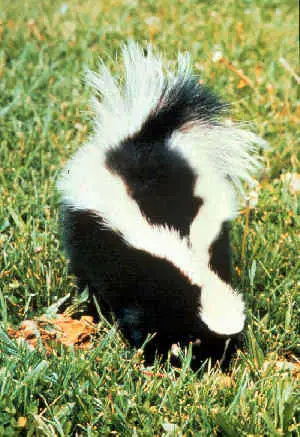
 📸 Photo
Photo: Public domain · Public domain · Wikimedia Commons Source
Striped Skunk
Mephitis mephitis (Striped Skunk · シマスカンク)
💡 Everyday Comparisons for Size, Mass & Speed
- 💡 The 6 m reach of its musk spray is farther than the length of a passenger car (about 4.5 m) (Comparison).
- 💡 A weight of 6.3 kg is similar to the weight of 3 two-liter bottles of water (2 liters each) (Comparison).
- 💡 By catching many insects it reduces pests, its viscous musk was once used as a base for perfumes, and in some areas it can be kept as a pet (ADW).
Reference standards: coach bus ~12 m, mid-size car ~4.9 m, compact car ~1 t, basketball hoop 3.05 m, credit card 8.56 cm.
Site-computed relative index from recorded values; not a formal scientific metric.
📖 1. Overview
The Striped Skunk is a black skunk with white stripes, the most common skunk in North America and also found in cities and suburbs. Gentle by nature, it usually ignores other animals.
🦴 2. Anatomy & Morphology
Its body is black with a thin white stripe from snout to forehead and a distinct white patch on the nape that splits into a V shape along the back. Its enlarged anal glands spray yellow musk that can reach up to 6 m.
🔍 3. Ecology & Behavior
An omnivore that mainly eats insects such as grasshoppers, crickets, and beetles in spring and summer, and small mammals and the eggs and chicks of ground-nesting birds in winter. It sprays musk in defense only when threatened.
🇰🇷 4. Connection to Korea
No direct record connecting this species to Korea has been found.
📚 Sources & References
- • IUCN Red List LC (2016) — https://www.iucnredlist.org/species/41635/45211301
- • IUCN Red List category LC — latest assessment at iucnredlist.org
- • mammaldiversity.org — 1005808
- • iucnredlist.org — 45211301
- • wikidata.org — Q368495
- • commons.wikimedia.org — File:Striped skunk.jpg
- • animaldiversity.org — Mephitis mephitis
- • nationalzoo.si.edu — striped-skunk
- • Silhouette: PhyloPic — Margot Michaud · CC0 1.0
Recorded dimensions are widely cited representative estimates from public literature and may vary by study or specimen.