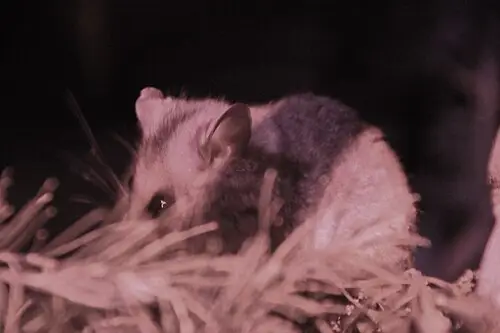
 📸 Photo
Photo: John Englart · CC BY-SA 2.0 · Wikimedia Commons Source
Mountain Pygmy Possum
Burramys parvus (Mountain Pygmy Possum · ブーラミス)
💡 Everyday Comparisons for Size, Mass & Speed
- 💡 Its average weight of 45 g is lighter than a chicken egg (about 60 g), and its body length of about 11 cm is shorter than a ballpoint pen (about 14 cm) (Comparison).
- 💡 Because of its restricted habitat and home range, it serves as a model subject for wildlife management research. Bogong moths migrating annually to the Alps are a vital food source for this animal.
Reference standards: coach bus ~12 m, mid-size car ~4.9 m, compact car ~1 t, basketball hoop 3.05 m, credit card 8.56 cm.
Site-computed relative index from recorded values; not a formal scientific metric.
📖 1. Overview
The mountain pygmy possum is a small, mouse-like marsupial living in boulderfields of the Australian Alps in southeastern Australia. It is assessed as Critically Endangered (CR) on the IUCN Red List.
🦴 2. Anatomy & Morphology
Its back is gray and its belly is light cream, while males take on a bright orange tint during the breeding season. Its tail is prehensile, its forepaws are dexterous, and the opposable first toe on its hindfoot aids in climbing.
🔍 3. Ecology & Behavior
During its active season (October–April) it is an omnivore that feeds heavily on bogong moths, and from May to September it hibernates. Because females must build up fat reserves for hibernation, they produce only one litter per year.
🇰🇷 4. Connection to Korea
No direct record connecting this species to Korea has been found.
📚 Sources & References
- • IUCN Red List CR (2008) — https://www.iucnredlist.org/species/3339/9775825
- • IUCN Red List category CR — latest assessment at iucnredlist.org
- • mammaldiversity.org — 1000369
- • iucnredlist.org — 9775825
- • wikidata.org — Q819469
- • commons.wikimedia.org — File:Mountain pygmy possum at Reptile Park, Gosford.jpg
- • animaldiversity.org — Burramys parvus
Recorded dimensions are widely cited representative estimates from public literature and may vary by study or specimen.