 📸 Photo
Photo: A. C. Tatarinov · CC BY-SA 3.0 · Wikimedia Commons Source
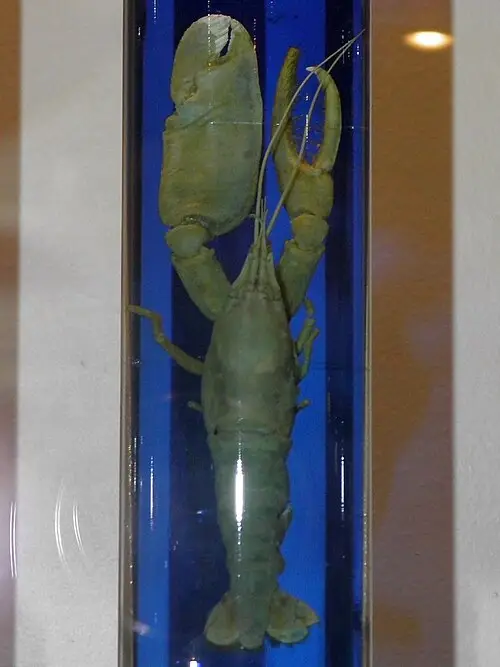
Teppo snapping shrimp
Alpheus brevicristatus (Teppo snapping shrimp · テッポウエビ)
Not Evaluated (NE) on the IUCN Red List yet.
💡 Everyday Comparisons for Size, Mass & Speed
- 💡 Its body length of about 50 mm is similar to the short side of a credit card (about 5.4 cm) (Comparison).
- 💡 The National List of Species of Korea notes that this shrimp is even more commonly found in seagrass beds on tidal flats of the Yellow and South Seas, making it a familiar shrimp of Korean mudflats.
Reference standards: coach bus ~12 m, mid-size car ~4.9 m, compact car ~1 t, basketball hoop 3.05 m, credit card 8.56 cm.
📖 1. Overview
The Teppo snapping shrimp is a relatively large snapping shrimp living in tidal flats of the Yellow and South Seas of Korea, and is a temperate species endemic to Northeast Asia that also lives in Japan.
🦴 2. Anatomy & Morphology
Its claws are well developed, and the major claw is about 3 times as long as wide and about 1.8 times the carapace length. Its body length is around 50 mm.
🔍 3. Ecology & Behavior
It digs burrows in muddy-sand bottoms or seagrass beds in the intertidal zone and shallow subtidal waters. It rubs the two fingers of its large claw together to make a loud sound and bursts cavitation bubbles to create shockwaves that deter enemies or stun prey. Egg-bearing females are commonly seen from June to August.
🇰🇷 4. Connection to Korea
The National List of Species of Korea records it from the southern and western coasts of Korea. It is commonly found in tidal flats of the Yellow and South Seas, especially in seagrass beds.
📚 Sources & References
- • IUCN Red List: not evaluated (NE) — cross-checked with the Wikidata conservation-status entry
- • marinespecies.org — aphia.php
- • 국가생물종목록(국립생물자원관) ktsn 120000048710 — https://species.nibr.go.kr/home/mainHome.do?cont_link=009&subMenu=009002&contCd=009002&ktsn=120000048710
- • wikidata.org — Q4469222
- • commons.wikimedia.org — File:Alpheus brevicristatus.jpg
- • species.nibr.go.kr — mainHome.do
- • sealifebase.se — Alpheus-brevicristatus.html
Recorded dimensions are widely cited representative estimates from public literature and may vary by study or specimen.