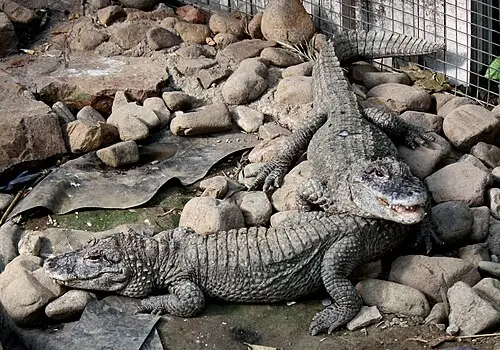
 📸 Photo
Photo: J. Patrick Fischer · CC BY-SA 3.0 · Wikimedia Commons Source
Chinese Alligator
Alligator sinensis (Chinese Alligator · ヨウスコウアリゲーター)
💡 Everyday Comparisons for Size, Mass & Speed
- 💡 A maximum weight of 38.5 kg is just shy of two 20 kg bags of rice (Comparison).
- 💡 A newly hatched young weighing about 30 g is half the weight of a chicken egg (about 60 g) (Comparison).
- 💡 The Smithsonian notes that fewer than 150 individuals may remain in the wild, and states that North American institutions manage about 100 individuals under a Species Survival Plan.
Reference standards: coach bus ~12 m, mid-size car ~4.9 m, compact car ~1 t, basketball hoop 3.05 m, credit card 8.56 cm.
Site-computed relative index from recorded values; not a formal scientific metric.
📖 1. Overview
The Chinese alligator is a relatively small alligator remaining only in the lower Yangtze River basin of eastern China, and is the only member of the family Alligatoridae living outside the Americas.
🦴 2. Anatomy & Morphology
Males grow up to 2.2 m and females up to 1.7 m; most weigh less than 23 kg, with a maximum of 38.5 kg. Newly hatched young weigh about 30 g.
🔍 3. Ecology & Behavior
Active at night, adults feed on fish, snails, clams, small mammals, and waterfowl, while juveniles eat insects and other small invertebrates. In winter, they shelter in burrows dug into wetland banks.
🇰🇷 4. Connection to Korea
No direct record connecting this species to Korea has been found.
📚 Sources & References
- • IUCN Red List CR (2018) — https://www.iucnredlist.org/species/867/3146005
- • IUCN Red List category CR — latest assessment at iucnredlist.org
- • catalogueoflife.org — BTRF
- • iucnredlist.org — 3146005
- • wikidata.org — Q194422
- • commons.wikimedia.org — File:2011 China-Alligator 0491.JPG
- • animaldiversity.org — Alligator sinensis
- • nationalzoo.si.edu — chinese-alligator
- • Silhouette: PhyloPic — Wani2Y · CC BY 4.0
Recorded dimensions are widely cited representative estimates from public literature and may vary by study or specimen.