 📸 Photo
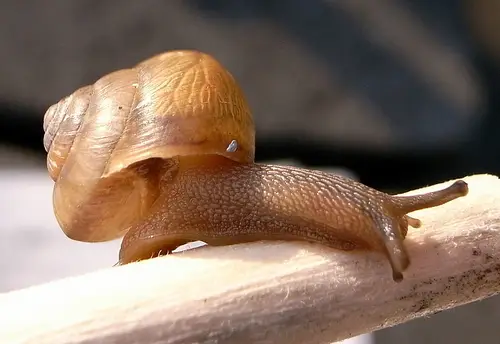
Photo: opencage.info · CC BY-SA 2.5 · Wikimedia Commons Source
Acusta despecta
Acusta despecta (Acusta despecta · Acusta despecta)
Not Evaluated (NE) on the IUCN Red List yet.
💡 Everyday Comparisons for Size, Mass & Speed
- 💡 A shell height of 21 mm is about 4/5 the diameter of a Korean 500-won coin (26.5 mm) (Comparison).
- 💡 Researchers at Korea's Rural Development Administration confirmed in 2010 that this snail was one of 4 snail and slug species feeding on perilla leaves in greenhouse farms in Miryang, Gyeongsangnam-do and Busan.
- 💡 In a 2025 study analyzing individuals raised for food at commercial snail farms in Korea, protein content was 70.9 g per 100 g of dry weight.
Reference standards: coach bus ~12 m, mid-size car ~4.9 m, compact car ~1 t, basketball hoop 3.05 m, credit card 8.56 cm.
📖 1. Overview
Acusta despecta is a land snail introduced by the National List of Species of Korea as the species with the widest domestic distribution range, also living in Japan and China. In the National List of Species of Korea, it is listed as the subspecies Acusta despecta sieboldiana.
🦴 2. Anatomy & Morphology
Its shell is rounded and ovate with a slightly raised spire, thin, pale brown, translucent, and faintly glossy. The shell height is about 21 mm and diameter about 20 mm.
🔍 3. Ecology & Behavior
It mainly appears near human dwellings. In a survey of greenhouse perilla farms in Miryang, Gyeongsangnam-do and Busan, it was identified as a leaf-eating snail, with peak occurrences in early May and mid-November.
🇰🇷 4. Connection to Korea
It is listed as 'Dalpaeng-i' (Korean name) in the National List of Species of Korea and is distributed throughout the country. Observation specimens have been collected from Chuncheon in Gangwon-do, Jeju Island, and Jindo in Jeollanam-do.
📚 Sources & References
- • IUCN Red List: not evaluated (NE) — cross-checked with the Wikidata conservation-status entry
- • catalogueoflife.org — 7PTQP
- • 국가생물종목록(국립생물자원관) ktsn 120000042589 — https://species.nibr.go.kr/home/mainHome.do?cont_link=009&subMenu=009002&contCd=009002&ktsn=120000042589
- • wikidata.org — Q4677901
- • commons.wikimedia.org — File:Acusta despecta sieboldiana.png
- • species.nibr.go.kr — mainHome.do
- • species.nibr.go.kr — mainHome.do
- • koreascience.or.kr — JAKO201014435570693.pub
- • pmc.ncbi.nlm.nih.gov — PMC11719477
Recorded dimensions are widely cited representative estimates from public literature and may vary by study or specimen.