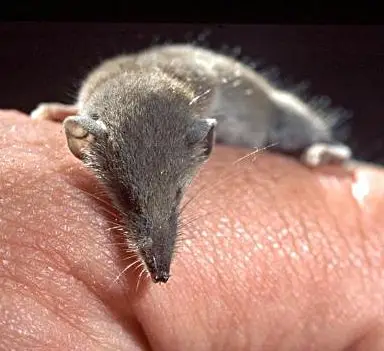
 📸 Photo
Photo: Suncus_etruscus.jpg : Trebol-a derivative work: Materialscientist ( talk ) · CC BY-SA 3.0 · Wikimedia Commons Source
Etruscan Shrew
Suncus etruscus (Etruscan Shrew · コビトジャコウネズミ)
💡 Everyday Comparisons for Size, Mass & Speed
- 💡 Its maximum weight of 3 g is less than half of a single Korean 500-won coin (7.7 g), and its maximum body length of 5 cm is about 2 times the diameter of a Korean 500-won coin (about 2.65 cm) (Comparison).
- 💡 Captive individuals have been recorded eating mealworms and crickets; because smaller prey is easier for them to handle, large food items must be broken into small pieces before they can eat them.
Reference standards: coach bus ~12 m, mid-size car ~4.9 m, compact car ~1 t, basketball hoop 3.05 m, credit card 8.56 cm.
Site-computed relative index from recorded values; not a formal scientific metric.
📖 1. Overview
The Etruscan Shrew is among the smallest mammals living today, inhabiting forests, shrublands, and grasslands.
🦴 2. Anatomy & Morphology
Adults usually weigh 1.8–3 g and measure 35–50 mm in body length, covered in short, soft grayish-brown fur. It is noted for its tiny hind limbs, and males and females show no obvious difference.
🔍 3. Ecology & Behavior
An insectivore, it feeds on ants and small insects. Because its tiny body requires high energy, it is constantly foraging, relying on its long snout rather than sight to find prey.
🇰🇷 4. Connection to Korea
No direct record connecting this species to Korea has been found.
📚 Sources & References
- • IUCN Red List LC (2017) — https://www.iucnredlist.org/species/90389138/22288134
- • IUCN Red List category LC — latest assessment at iucnredlist.org
- • mammaldiversity.org — 1004057
- • iucnredlist.org — 22288134
- • wikidata.org — Q369889
- • commons.wikimedia.org — File:Suncus etruscus crop.jpg
- • animaldiversity.org — Suncus etruscus
- • Silhouette: PhyloPic — Margot Michaud · CC0 1.0
Recorded dimensions are widely cited representative estimates from public literature and may vary by study or specimen.