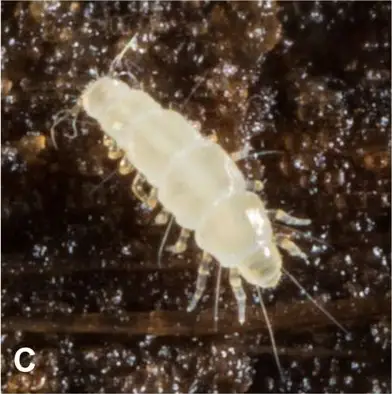
 📸 Photo
Photo: Gonzalo Giribet · CC BY 4.0 · Wikimedia Commons Source
Pauropus huxleyi
Pauropus huxleyi (Pauropus huxleyi · Pauropus huxleyi)
Not Evaluated (NE) on the IUCN Red List yet.
💡 Everyday Comparisons for Size, Mass & Speed
- 💡 A pauropod body length of 0.5–1.5 mm is 1/10 to 1/3 the length of a grain of rice (about 5 mm) (Comparison, using values for the pauropod group).
- 💡 It has been recorded collected in leaf litter of beech forests in the Bükk Mountains of Hungary. Even a handful of fallen leaves stepped on along a forest trail can hold tiny, invisible myriapods like this.
Reference standards: coach bus ~12 m, mid-size car ~4.9 m, compact car ~1 t, basketball hoop 3.05 m, credit card 8.56 cm.
📖 1. Overview
Pauropus huxleyi is a species of pauropod (Pauropoda), tiny soil-dwelling myriapods around 1.5 mm long, widely distributed across the Palearctic realm. Pauropods were first discovered in London, England, in 1866.
🦴 2. Anatomy & Morphology
Pauropods are usually 0.5–1.5 mm long and have 8–11 trunk segments, each with one pair of legs. They are characterized by branched antennae, and because their dorsal plates are fused in pairs, they appear to have fewer segments when viewed from above.
🔍 3. Ecology & Behavior
This species was recorded collected in 2011 from beech forest leaf litter in the Bükk Mountains of Hungary (at about 500 m elevation). Male pauropods deposit sperm packets in the soil that females pick up, and feeding habits remain unknown for most species.
🇰🇷 4. Connection to Korea
No direct record connecting this species to Korea has been found.
📚 Sources & References
- • IUCN Red List: not evaluated (NE) — cross-checked with the Wikidata conservation-status entry
- • catalogueoflife.org — 7679L
- • wikidata.org — Q10674872
- • commons.wikimedia.org — File:Pauropus huxleyi (Massachusetts, USA).jpg
- • keys.lucidcentral.org — Pauropoda.html
- • real.mtak.hu — ActaZH 2015 Vol 61 2 81.pdf
- • Silhouette: PhyloPic — author not recorded · CC0 1.0
Recorded dimensions are widely cited representative estimates from public literature and may vary by study or specimen.