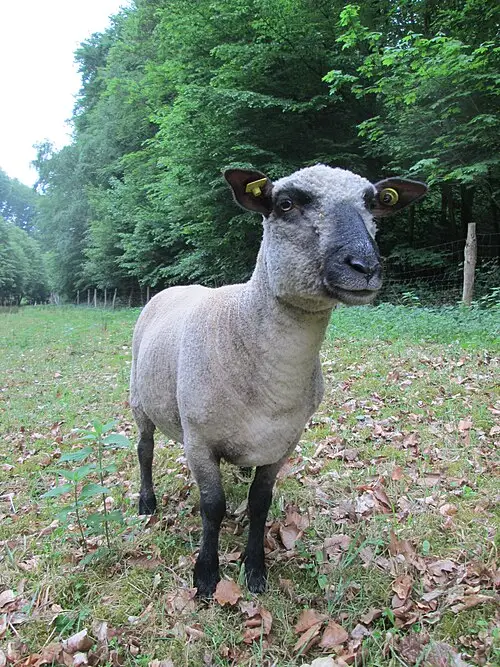
 📸 Photo
Photo: AnRo0002 · CC0 · Wikimedia Commons Source
Domestic Sheep
Ovis aries (Domestic Sheep · Domestic Sheep)
Not Evaluated (NE) on the IUCN Red List yet.
💡 Everyday Comparisons for Size, Mass & Speed
- 💡 Because a single shepherd can manage a whole flock, sheep are efficient for producing meat, milk, and wool (Animal Diversity Web).
- 💡 Their large size and ease of care also make them useful model animals in scientific research (Animal Diversity Web).
- 💡 A large breed weighing 200 kg equals ten 20 kg bags of rice (Comparison).
Reference standards: coach bus ~12 m, mid-size car ~4.9 m, compact car ~1 t, basketball hoop 3.05 m, credit card 8.56 cm.
Site-computed relative index from recorded values; not a formal scientific metric.
📖 1. Overview
Domesticated about 9000–11000 years ago, the Domestic Sheep is one of the most economically important animals on Earth, providing meat, milk, wool, and hides.
🦴 2. Anatomy & Morphology
It has a narrow snout with a vertical cleft in the upper lip, and scent glands beneath the eyes, in the groin, and between the toes. Body size and coat type vary greatly among breeds.
🔍 3. Ecology & Behavior
It alternates throughout the day between grazing large amounts of grass in a short time and resting to ruminate. With a strong flocking instinct, it becomes highly stressed when isolated, and females usually give birth to one or two lambs.
🇰🇷 4. Connection to Korea
No direct record connecting this species to Korea has been found.
📚 Sources & References
- • IUCN Red List: not evaluated (NE) — cross-checked with the Wikidata conservation-status entry
- • mammaldiversity.org — 1006204
- • wikidata.org — Q29350771
- • commons.wikimedia.org — File:20180513Ovis aries1.jpg
- • animaldiversity.org — Ovis aries
- • Silhouette: PhyloPic — author not recorded · CC0 1.0
Recorded dimensions are widely cited representative estimates from public literature and may vary by study or specimen.