 📸 Photo
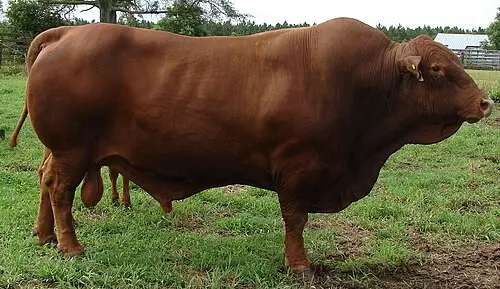
Photo: Buenoperez · Public domain · Wikimedia Commons Source
Domestic Cattle
Bos taurus (Domestic Cattle · Domestic Cattle)
Not Evaluated (NE) on the IUCN Red List yet.
💡 Everyday Comparisons for Size, Mass & Speed
- 💡 A single cow provides not only dairy products such as milk and cheese as well as meat, but also raw materials for medicines, glue, soap, and leather (Animal Diversity Web).
- 💡 The heaviest individuals weigh 1,363 kg, equal to about 68 bags of 20 kg rice (Comparison).
- 💡 Since ancient times, males have been used for plowing and pulling heavy loads, while their dung has served as fertilizer and fuel (Animal Diversity Web).
Reference standards: coach bus ~12 m, mid-size car ~4.9 m, compact car ~1 t, basketball hoop 3.05 m, credit card 8.56 cm.
Site-computed relative index from recorded values; not a formal scientific metric.
📖 1. Overview
Domestic cattle are large livestock raised by humans on pastures all over the world. Their coat color varies widely from black and white to reddish brown and brown.
🦴 2. Anatomy & Morphology
They have a short neck with a hanging fold of skin (dewlap) under the chin, two hollow horns, and a long, tufted tail. Instead of upper incisors, a thick dental pad grinds and crushes coarse grass.
🔍 3. Ecology & Behavior
As ruminants that eat grasses and stems, they have a four-chambered stomach that breaks down plant matter through cud chewing. Herds have a dominance hierarchy, and a single calf born after about 9 months of gestation soon stands and walks.
🇰🇷 4. Connection to Korea
No direct record connecting this species to Korea has been found.
📚 Sources & References
- • IUCN Red List: not evaluated (NE) — cross-checked with the Wikidata conservation-status entry
- • mammaldiversity.org — 1006267
- • wikidata.org — Q19610691
- • commons.wikimedia.org — File:Toro 25M.jpg
- • animaldiversity.org — Bos taurus
- • Silhouette: PhyloPic — Ivan Iofrida · CC BY 4.0
Recorded dimensions are widely cited representative estimates from public literature and may vary by study or specimen.