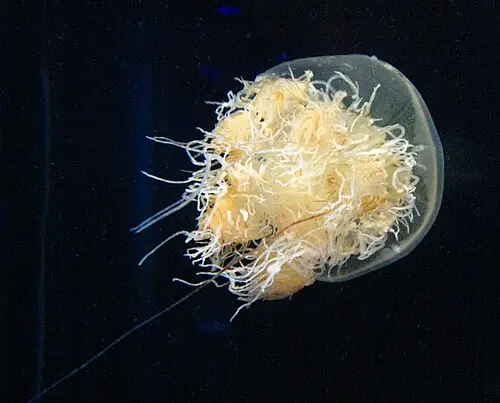
 📸 Photo
Photo: KENPEI · CC BY-SA 3.0 · Wikimedia Commons Source
Nomura's jellyfish
Nemopilema nomurai (Nomura's jellyfish · エチゼンクラゲ)
Not Evaluated (NE) on the IUCN Red List yet.
💡 Everyday Comparisons for Size, Mass & Speed
- 💡 Its maximum diameter of 2 m is similar to the height of a room door (about 2 m) (Comparison).
- 💡 Its maximum weight of 200 kg is the weight of ten 20 kg bags of rice (Comparison).
- 💡 Since the early 2000s, Japanese fisheries have been threatened by massive blooms of this jellyfish (SeaLifeBase).
Reference standards: coach bus ~12 m, mid-size car ~4.9 m, compact car ~1 t, basketball hoop 3.05 m, credit card 8.56 cm.
Site-computed relative index from recorded values; not a formal scientific metric.
📖 1. Overview
Nomura's jellyfish is one of the largest jellyfish species and lives only in the marginal seas around East Asia. It sometimes appears in massive blooms and damages fisheries.
🦴 2. Anatomy & Morphology
It is a huge jellyfish with a bell diameter of up to 2 m and a weight of up to 200 kg.
🔍 3. Ecology & Behavior
Its chitin-covered podocysts (the dormant stage of polyps) remain dormant for at least about 6 years before developing into adults, and when exposed to high water temperatures they excyst en masse, causing jellyfish blooms. Its lifespan is about 1 year.
🇰🇷 4. Connection to Korea
It is listed on the National List of Species of Korea under the name Nomura-ipgit-haepari (Korean name).
📚 Sources & References
- • IUCN Red List: not evaluated (NE) — cross-checked with the Wikidata conservation-status entry
- • marinespecies.org — aphia.php
- • 국가생물종목록(국립생물자원관) ktsn 120000039684 — https://species.nibr.go.kr/home/mainHome.do?cont_link=009&subMenu=009002&contCd=009002&ktsn=120000039684
- • wikidata.org — Q133389
- • commons.wikimedia.org — File:Nemopilema nomurai1.jpg
- • sealifebase.se — Nemopilema-nomurai.html
- • Silhouette: PhyloPic — author not recorded · CC0 1.0
Recorded dimensions are widely cited representative estimates from public literature and may vary by study or specimen.