 📸 Photo
Photo: John T. Huber, John S. Noyes, J. Read · CC BY 3.0 · Wikimedia Commons Source
Fairyfly
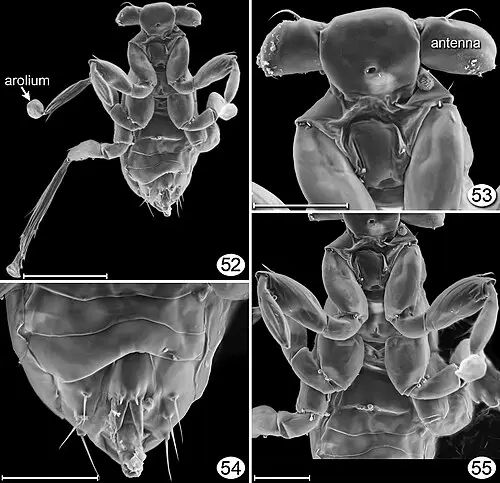
Dicopomorpha echmepterygis (Fairyfly · Fairyfly)
Not Evaluated (NE) on the IUCN Red List yet.
💡 Everyday Comparisons for Size, Mass & Speed
- 💡 If males of 0.24 mm body length were lined up in a row, about 110 of them would fit across the diameter of a Korean 500-won coin (26.5 mm) (Comparison).
- 💡 Other parasitoid wasps in the same family sometimes help reduce crop pests, but because this species does not parasitize pests, it has no known economic benefit (ADW).
Reference standards: coach bus ~12 m, mid-size car ~4.9 m, compact car ~1 t, basketball hoop 3.05 m, credit card 8.56 cm.
📖 1. Overview
The fairyfly is a tiny parasitoid wasp in the family Mymaridae whose males are the smallest known adult insects. There is no record of it on the National List of Species of Korea.
🦴 2. Anatomy & Morphology
Males lack eyes and wings, measure 0.139–0.240 mm in body length, and have one-eighth the body volume of females. Females are entirely black and winged, dispersing among trees in flight to find hosts.
🔍 3. Ecology & Behavior
It spends most of its life inside the egg of its host bark louse, Echmepteryx hageni, where the female consumes nearly all the nutrients inside the egg. A single host egg usually yields one female and one to three males, and mating occurs mainly between siblings.
🇰🇷 4. Connection to Korea
No direct record connecting this species to Korea has been found.
📚 Sources & References
- • IUCN Red List: not evaluated (NE) — cross-checked with the Wikidata conservation-status entry
- • catalogueoflife.org — 35QKJ
- • wikidata.org — Q138436
- • commons.wikimedia.org — File:Dicopomorpha echmepterygis.jpg
- • animaldiversity.org — Dicopomorpha echmepterygis
Recorded dimensions are widely cited representative estimates from public literature and may vary by study or specimen.