 📸 Photo
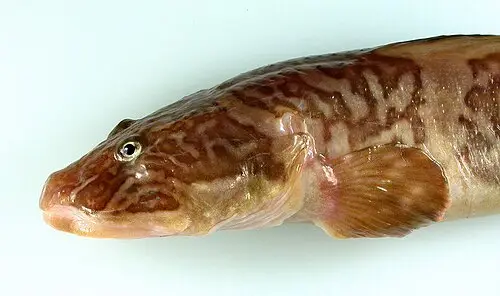
Photo: Kitty Mecklenburg · Public domain · Wikimedia Commons Source
Giant mottled eel
Anguilla marmorata (Giant mottled eel · オオウナギ)
💡 Everyday Comparisons for Size, Mass & Speed
- 💡 It belongs to the same genus Anguilla as the Japanese eel served at the table, and the giant mottled eel grows larger, reaching up to 2 m.
- 💡 A body length of 2 m is similar to the height of a tall adult (comparison). A maximum weight of 20.5 kg is about one 20 kg sack of rice (comparison).
- 💡 Because its habitat below Cheonjiyeon Waterfall in Seogwipo, Jeju is protected as a Natural Monument, it is also a popular travel destination.
Reference standards: coach bus ~12 m, mid-size car ~4.9 m, compact car ~1 t, basketball hoop 3.05 m, credit card 8.56 cm.
Site-computed relative index from recorded values; not a formal scientific metric.
📖 1. Overview
The giant mottled eel is an eel much larger than the Japanese eel, growing up to 2 m, and in Korea it lives only in Cheonjiyeon on Jeju Island.
🦴 2. Anatomy & Morphology
The body is a slender, elongated cylinder covered all over with blackish-brown mottled markings. The dorsal fin begins closer to the gill opening than to the anus.
🔍 3. Ecology & Behavior
Active at night, it feeds on crabs, frogs, and fishes. It grows in rivers, migrates to the deep sea to spawn, and ends its life after breeding once.
🇰🇷 4. Connection to Korea
On Korea's National Species List, it is recorded as occurring in Korea only at Cheonjiyeon on Jeju Island. The Natural Monument designation of the species itself (1978) was lifted on June 9, 2009, while the 'Jeju Giant Mottled Eel Habitat' at Cheonjiyeon in Seogwipo (designated December 7, 1962) remains a Natural Monument today.
📚 Sources & References
- • IUCN Red List LC (2020) — https://www.iucnredlist.org/species/166189/176493885
- • IUCN Red List category LC — latest assessment at iucnredlist.org
- • catalogueoflife.org — 66R6D
- • iucnredlist.org — 176493885
- • 국가생물종목록(국립생물자원관) ktsn 120000057415 — https://species.nibr.go.kr/home/mainHome.do?cont_link=009&subMenu=009002&contCd=009002&ktsn=120000057415
- • wikidata.org — Q496154
- • commons.wikimedia.org — File:Marbled Eel, NOAA arctic.jpg
- • fishbase.se — Anguilla-marmorata.html
- • species.nibr.go.kr — list
- • heritage.go.kr — culSelectDetail.do
- • heritage.go.kr — culSelectDetail.do
- • Silhouette: PhyloPic — Steven Traver · CC0 1.0 (Congeneric silhouette — Anguilla rostrata)
Recorded dimensions are widely cited representative estimates from public literature and may vary by study or specimen.