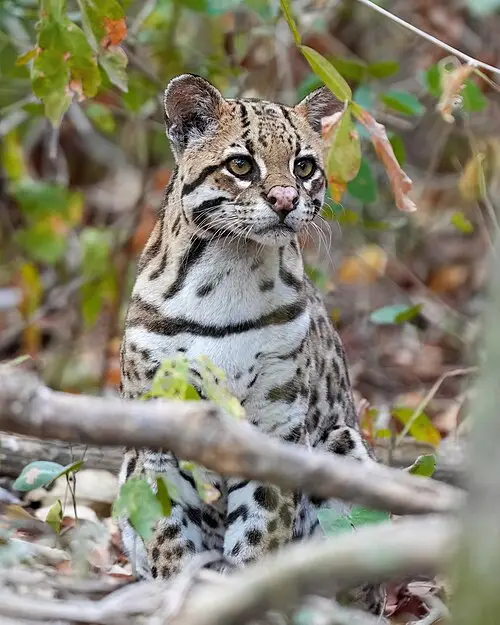
 📸 Photo
Photo: Giles Laurent · CC BY-SA 4.0 · Wikimedia Commons Source
Ocelot
Leopardus pardalis (Ocelot · オセロット)
💡 Everyday Comparisons for Size, Mass & Speed
- 💡 Its maximum weight of 16 kg is slightly lighter than a 20 kg bag of rice, and its length of about 1 m is around the height of a lower-grade elementary school child (Comparison).
- 💡 From the 1960s to the mid-1980s, spotted-cat fur was popular and an Ocelot fur coat sold for 40,000 dollars in West Germany, while pets were also expensive, but international trade has been largely banned since CITES in 1975 (ADW).
Reference standards: coach bus ~12 m, mid-size car ~4.9 m, compact car ~1 t, basketball hoop 3.05 m, credit card 8.56 cm.
Site-computed relative index from recorded values; not a formal scientific metric.
📖 1. Overview
The Ocelot is the largest cat in the genus Leopardus, living in tropical forests and scrublands with dense vegetation.
🦴 2. Anatomy & Morphology
Its fur is short with a white belly, and its back varies by habitat from off-white to tawny or reddish-gray. Dark stripes, blotches, and rosettes gather in small clusters, and all-black individuals occasionally occur.
🔍 3. Ecology & Behavior
Tracking prey by scent trails, its diet consists of 65–66% small rodents, 12–18% reptiles, and 4–11% birds. Active at night and dusk, it travels 1.8–6.7 km a day and is skilled at climbing trees and swimming as well as moving on the ground.
🇰🇷 4. Connection to Korea
No direct record connecting this species to Korea has been found.
📚 Sources & References
- • IUCN Red List LC (2015) — https://www.iucnredlist.org/species/11509/97212355
- • IUCN Red List category LC — latest assessment at iucnredlist.org
- • mammaldiversity.org — 1006002
- • iucnredlist.org — 97212355
- • wikidata.org — Q33261
- • commons.wikimedia.org — File:081 Ocelot in Encontro das Águas State Park Photo by Gi
- • animaldiversity.org — Leopardus pardalis
- • Silhouette: PhyloPic — Margot Michaud · CC0 1.0
Recorded dimensions are widely cited representative estimates from public literature and may vary by study or specimen.