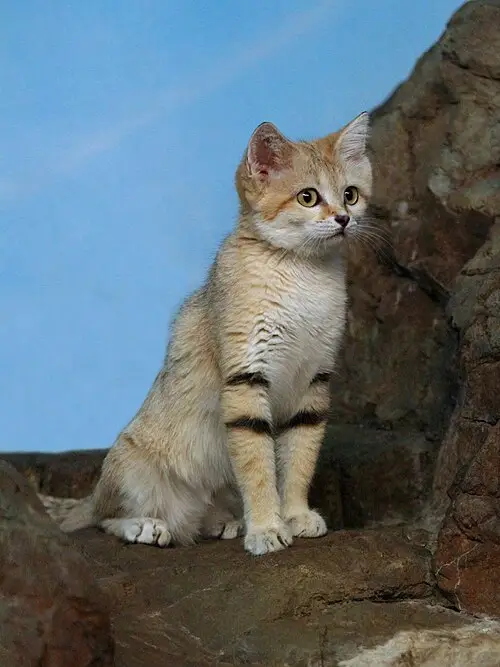
 📸 Photo
Photo: Greg Hume · CC BY-SA 3.0 · Wikimedia Commons Source
Sand Cat
Felis margarita (Sand Cat · スナネコ)
💡 Everyday Comparisons for Size, Mass & Speed
- 💡 Its body length of about 57 cm is just under twice the long side of A4 paper, and its maximum weight of 3.4 kg is just over two 1.5 L bottles of water (Comparison).
- 💡 The Sand Cat is targeted by the illegal pet trade (ADW) and is famous as a fearless hunter of venomous snakes (Smithsonian).
Reference standards: coach bus ~12 m, mid-size car ~4.9 m, compact car ~1 t, basketball hoop 3.05 m, credit card 8.56 cm.
Site-computed relative index from recorded values; not a formal scientific metric.
📖 1. Overview
The Sand Cat is a desert-dwelling wild cat, about the size of a domestic cat and the smallest of all wild cats. It lives in places where daytime surface temperatures reach up to 51 °C and drop below freezing at night.
🦴 2. Anatomy & Morphology
Its large ear pinnae are its most prominent feature. The bony chambers inside its ears (auditory bullae) are much larger than in other cats, allowing it to hear prey moving underground in the sand, and its medium-length thick coat shields it from cold nights.
🔍 3. Ecology & Behavior
An opportunistic hunter, it preys on gerbils, hares, spiders, lizards, birds, and even venomous snakes. It can go weeks without drinking water by getting moisture from its prey, and digs shallow burrows by day to escape the heat. Gestation lasts 59–63 days, producing 1–8 kittens.
🇰🇷 4. Connection to Korea
No direct record connecting this species to Korea has been found.
📚 Sources & References
- • IUCN Red List LC (2016) — https://www.iucnredlist.org/species/8541/50651884
- • IUCN Red List category LC — latest assessment at iucnredlist.org
- • mammaldiversity.org — 1005988
- • iucnredlist.org — 50651884
- • wikidata.org — Q175329
- • commons.wikimedia.org — File:SandCat12.jpg
- • animaldiversity.org — Felis margarita
- • nationalzoo.si.edu — sand-cat
- • Silhouette: PhyloPic — Margot Michaud · CC0 1.0
Recorded dimensions are widely cited representative estimates from public literature and may vary by study or specimen.