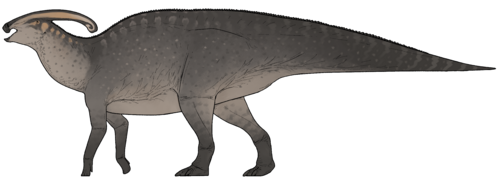
 🎨 复原图
Restoration of P. walkeri
复原图: Connor Ashbridge · CC BY-SA 4.0 · Wikimedia Commons 原文件
活体复原图是基于化石证据的科学艺术复原,真实体色与软组织细节仍存在不确定性。
副栉龙
Parasaurolophus walkeri (Parasaurolophus · パラサウロロフス)
仅见于化石的物种。IUCN红色名录仅评估公元1500年以来生存或灭绝的物种,因此无评估等级。
💡 用日常生活实例看体型·体重·速度
- 📏 体长 9m — 约为中型轿车(约4.9米)的 1.8倍长
- 🏢 肩高 3.6m — 约为1.75米人类身高的 2.1倍
- ⚖️ 体重 3.5吨 — 约相当于 3.5辆小型汽车(每辆约1吨)的重量
- ⚡ 速度 32km/h — 约为博尔特百米世界纪录平均速度(37.6km/h)的 0.9倍
参考基准:大巴车约12米、中型轿车约4.9米、小型汽车约1吨、篮球筐3.05米、银行卡8.56厘米等通用规格。
根据上述数值计算的网站相对换算值,并非正式科学测量指标。
📖 1. 概览
这是一种利用向脑后长长延伸的中空管状头冠发出如长号般共鸣声来进行交流的鸭嘴龙类。
🌐 Wikipedia 摘要摘录Parasaurolophus is a genus of hadrosaurid "duck-billed" dinosaur that lived in what is now western North America and possibly Asia during the Late Cretaceous period, about 76.5–73 million years ago. It was a large herbivore that could reach over 9 metres (30 ft) long and weigh over 5 metric tons, and were able to move as a biped and a quadruped. Three species are universally recognized: P. walkeri, P. tubicen, and the short-crested P. cyrtocristatus. Additionally, a fourth species, P. jiayinensis, has been proposed, although it is more commonly placed in the separate genus Charonosaurus. Remains are known from Alberta, New Mexico, and Utah, as well as possibly Heilongjiang if Charonosaurus is in fact part of the genus. The genus was first described in 1922 by William Parks from a skull and partial skeleton found in Alberta.
🦴 2. 身体结构与特征
它用由数百颗牙齿紧密排列咬合而成的齿系(Dental battery)磨碎坚韧的植物进食。
🔍 3. 化石记录与古生态
通过头骨CT扫描,科学家已科学复原出其真实的共鸣声频率。
🇰🇷 4. 与韩国的关联
它是朝鲜半岛南海岸白垩纪地层中最常见的鸟脚类足迹化石的代表类群。
📚 来源与参考资料
- • Wikipedia “Parasaurolophus”
- • Wikidata Q1229978
- • Fossil taxon — the IUCN Red List assesses only species living or extinct since 1500
- • nhm.ac.uk — parasaurolophus.html
- • 剪影: PhyloPic — Jack Mayer Wood · CC0 1.0
数值为公开文献中广泛引用的代表性估计值,可能因研究或个体而异。