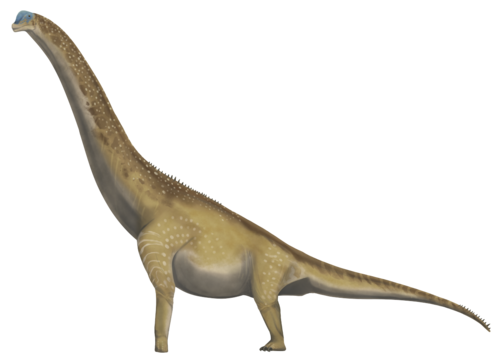
 🎨 复原图
Life restoration
复原图: Charles Nye · CC BY-SA 4.0 · Wikimedia Commons 原文件
活体复原图是基于化石证据的科学艺术复原,真实体色与软组织细节仍存在不确定性。
腕龙
Brachiosaurus altithorax (Brachiosaurus · ブラキオサウルス)
仅见于化石的物种。IUCN红色名录仅评估公元1500年以来生存或灭绝的物种,因此无评估等级。
💡 用日常生活实例看体型·体重·速度
- 📏 体长 22m — 约为大巴车(约12米)的 1.8倍长
- 🏢 肩高 13m — 约相当于 4.6层楼高(每层约2.8米)
- ⚖️ 体重 45吨 — 约相当于 45辆小型汽车(每辆约1吨)的重量
- ⚡ 速度 18km/h — 约为人类步行速度(约4km/h)的 4.5倍
参考基准:大巴车约12米、中型轿车约4.9米、小型汽车约1吨、篮球筐3.05米、银行卡8.56厘米等通用规格。
根据上述数值计算的网站相对换算值,并非正式科学测量指标。
📖 1. 概览
前肢比后肢更长,头部高度达13m(相当于4~5层公寓楼高),是侏罗纪极具代表性的巨型蜥脚类恐龙。
🌐 Wikipedia 摘要摘录Brachiosaurus is a genus of sauropod dinosaur that lived in North America during the Late Jurassic, about 155.6 to 145.5 million years ago. It was first described by American paleontologist Elmer S. Riggs in 1903 from fossils found in the Colorado River valley in western Colorado, United States. Riggs named the dinosaur Brachiosaurus altithorax; the generic name is Greek for "arm lizard", in reference to its proportionately long arms, and the specific name means "deep chest". Brachiosaurus is estimated to have been between 18 and 22 meters long; body mass estimates of the subadult holotype specimen range from 28.3 to 46.9 metric tons. It had a disproportionately long neck, small skull, and large overall size, all of which are typical for sauropods. Atypically, Brachiosaurus had longer forelimbs than hindlimbs, which resulted in a steeply inclined trunk and a proportionally shorter tail.
🦴 2. 身体结构与特征
颈椎与背椎内部发育有与气囊(Air sac)相连的气腔,既减轻了骨骼重量,又将呼吸效率发挥到极致。
🔍 3. 化石记录与古生态
它每天摄食数百kg针叶树叶,漫步于侏罗纪平原之上。
🇰🇷 4. 与韩国的关联
它与朝鲜半岛固城、海南、义城发现的巨型蜥脚类足迹化石的造迹恐龙同属一个谱系。
📚 来源与参考资料
- • Wikipedia “Brachiosaurus”
- • Wikidata Q22105849
- • Fossil taxon — the IUCN Red List assesses only species living or extinct since 1500
- • nhm.ac.uk — brachiosaurus.html
- • 剪影: PhyloPic — Michael P. Taylor · CC0 1.0
数值为公开文献中广泛引用的代表性估计值,可能因研究或个体而异。