 📸 照片
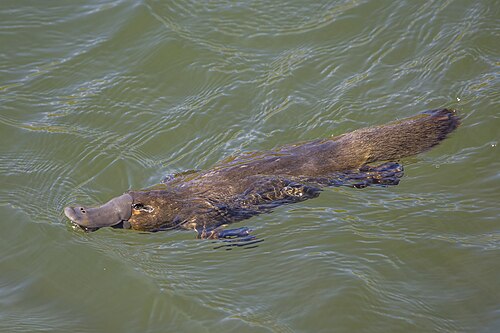
Duck-billed platypus ( Ornithorhynchus anatinus ), Scottsdale, TAS, Australia
照片: Charles J. Sharp · CC BY-SA 4.0 · Wikimedia Commons 原文件
鸭嘴兽
Ornithorhynchus anatinus (Platypus · カモノハシ)
💡 用日常生活实例看体型·体重·速度
- 📏 体长 39cm — 约为A4纸长边(29.7厘米)的 1.3倍
- ⚖️ 体重 800g — 约相当于 13.3个鸡蛋(每个约60克)的重量
- ⚡ 速度 12km/h — 约为人类步行速度(约4km/h)的 3倍
参考基准:大巴车约12米、中型轿车约4.9米、小型汽车约1吨、篮球筐3.05米、银行卡8.56厘米等通用规格。
根据上述数值计算的网站相对换算值,并非正式科学测量指标。
📖 1. 概览
身为哺乳动物却像鸟类或爬行动物一样产卵(单孔目),能用鸭嘴感知微弱生物电,且雄性后足长有毒刺,堪称进化生物学最奇特的神秘动物。
🌐 Wikipedia 摘要摘录The platypus, sometimes referred to as the duck-billed platypus, is a semiaquatic, egg-laying mammal endemic to eastern Australia, including Tasmania. The platypus is the sole living representative of the family Ornithorhynchidae and genus Ornithorhynchus, though a number of related species appear in the fossil record. Together with the four species of echidna, it is one of the five extant species of monotremes, mammals that lay eggs instead of giving birth to live young. Like other monotremes, the platypus has a sense of electrolocation, which it uses to detect prey in water while its eyes, ears and nostrils are closed. It is one of the few species of venomous mammals, as the male platypus has a spur on each hind foot that delivers an extremely painful venom.
🦴 2. 身体结构与特征
在水中会将眼、耳、鼻全部闭上,仅靠鸭嘴状喙部上的4万个电感受器(Electroreceptors)探测河床虾类肌肉收缩产生的电流进行捕猎。
🔍 3. 生态与行为
没有乳头,幼崽破壳后靠舔食母兽腹部皮肤渗出的乳汁长大,且其毛发在紫外线(UV)照射下会发出青绿色生物荧光。
🇰🇷 4. 与韩国的关联
是从爬行动物型祖先向现生哺乳动物过渡的基因组进化活化石。
📚 来源与参考资料
- • Wikipedia “Platypus”
- • Wikidata Q15343
- • IUCN Red List category NT — latest assessment at iucnredlist.org
- • animaldiversity.org — Ornithorhynchus anatinus
- • 剪影: PhyloPic — Rachel T Mason · CC0 1.0
数值为公开文献中广泛引用的代表性估计值,可能因研究或个体而异。