 📸 写真
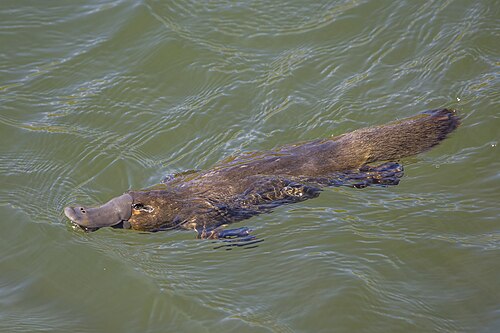
Duck-billed platypus ( Ornithorhynchus anatinus ), Scottsdale, TAS, Australia
写真: Charles J. Sharp · CC BY-SA 4.0 · Wikimedia Commons 元ファイル
カモノハシ
Ornithorhynchus anatinus (Platypus · カモノハシ)
💡 身近な例で見るサイズ・重さ・速度
- 📏 体長 39cm — A4用紙の長辺(29.7cm)の約1.3枚分
- ⚖️ 体重 800g — 鶏卵(約60g)の約13.3個分の重さ
- ⚡ 速度 12km/h — 人の歩行速度(約4km/h)の約3倍
比較基準: 大型バス約12m、乗用車約4.9m、軽自動車約1t、バスケットゴール3.05m、クレジットカード8.56cmなどの標準規格。
上記数値から算出したサイト独自の換算値であり、科学的な測定指標ではありません。
📖 1. 概要
哺乳類でありながら鳥類や爬虫類のように卵を産み(単孔類)、くちばしで微弱な生体電気を感知し、オスの後ろ足に毒の蹴爪を持つ進化生物学最大のミステリー動物です。
🌐 Wikipedia 要約抜粋The platypus, sometimes referred to as the duck-billed platypus, is a semiaquatic, egg-laying mammal endemic to eastern Australia, including Tasmania. The platypus is the sole living representative of the family Ornithorhynchidae and genus Ornithorhynchus, though a number of related species appear in the fossil record. Together with the four species of echidna, it is one of the five extant species of monotremes, mammals that lay eggs instead of giving birth to live young. Like other monotremes, the platypus has a sense of electrolocation, which it uses to detect prey in water while its eyes, ears and nostrils are closed. It is one of the few species of venomous mammals, as the male platypus has a spur on each hind foot that delivers an extremely painful venom.
🦴 2. 体の構造と特徴
水中では目・耳・鼻をすべて閉じ、アヒルのような形をしたくちばしにある4万個の電気受容器(Electroreceptors)だけで川底のエビの筋収縮電流を感知して狩りをします。
🔍 3. 生態と行動
卵から孵化した子どもには乳首なしで腹部の皮膚から染み出る母乳を与え、紫外線(UV)の下では毛が青緑色の生物蛍光を発します。
🇰🇷 4. 韓国との関わり
爬虫類型の祖先から現生哺乳類へと移行するゲノム進化の「生きた化石」です。
📚 出典・確認先
- • Wikipedia “Platypus”
- • Wikidata Q15343
- • IUCN Red List category NT — latest assessment at iucnredlist.org
- • animaldiversity.org — Ornithorhynchus anatinus
- • シルエット: PhyloPic — Rachel T Mason · CC0 1.0
数値は公開資料で広く引用される代表的な推定値であり、研究や個体により異なる場合があります。