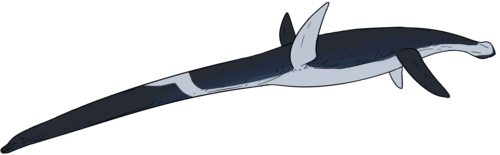
 🎨 復元図
Life restoration
復元図: Connor Ashbridge · CC BY-SA 4.0 · Wikimedia Commons 元ファイル
生体復元図は化石に基づく研究者・画家の解釈であり、実際の色彩や外見には不明な部分があります。
エラスモサウルス
Elasmosaurus platyurus (Elasmosaurus · エラスモサウルス)
化石のみで知られる種です。IUCNレッドリストは西暦1500年以降に生息していた種のみを評価するため、等級はありません。
💡 身近な例で見るサイズ・重さ・速度
- 📏 体長 10.3m — 大型バス(約12m)の約0.9台分の長さ
- 🏢 体高 1.8m — 身長1.75mのヒトの約1倍の高さ
- ⚖️ 体重 2.1t — 軽自動車(約1t)の約2.1台分の重さ
- ⚡ 速度 28km/h — ウサイン・ボルトの100m世界記録平均速度(37.6km/h)の約0.7倍
比較基準: 大型バス約12m、乗用車約4.9m、軽自動車約1t、バスケットゴール3.05m、クレジットカード8.56cmなどの標準規格。
上記数値から算出したサイト独自の換算値であり、科学的な測定指標ではありません。
📖 1. 概要
全長10.3mのうち首の長さだけで7.1m(頸椎72個)に達する代表的な長頸竜(首長竜)です。
🌐 Wikipedia 要約抜粋Elasmosaurus is a genus of plesiosaur that lived in North America during the Campanian stage of the Late Cretaceous period, at about 80.6 to 77 million years ago. The first specimen was discovered in 1867 near Fort Wallace, Kansas, US, and was sent to the American paleontologist Edward Drinker Cope, who named it E. platyurus in 1868. The generic name means "thin-plate reptile", and the specific name means "flat-tailed". Cope originally reconstructed the skeleton of Elasmosaurus with the skull at the end of the tail, an error which was made light of by the paleontologist Othniel Charles Marsh, and became part of their "Bone Wars" rivalry. Only one incomplete Elasmosaurus skeleton is definitely known, consisting of a fragmentary skull, the spine, and now lost pectoral and pelvic girdles, and a single species is recognized today; other species are now considered invalid or have been moved to other genera. A fragmentary specimen from Germany may belong to this genus.
🦴 2. 体の構造と特徴
四枚のヒレ状の脚を水中で羽ばたくように動かして泳いでいました。
🔍 3. 化石記録と古生態
19世紀の古生物学界における「化石戦争(Bone Wars)」を象徴する標本です。
🇰🇷 4. 韓国との関わり
中生代の海生爬虫類における水中適応を説明する代表的な種です。
📚 出典・確認先
- • Wikipedia “Elasmosaurus”
- • Wikidata Q20717895
- • Fossil taxon — the IUCN Red List assesses only species living or extinct since 1500
- • シルエット: PhyloPic — E. D. Cope (modified by T. Michael Keesey, Michael P. Taylor & Matthew J. Wedel) · CC BY 3.0
数値は公開資料で広く引用される代表的な推定値であり、研究や個体により異なる場合があります。