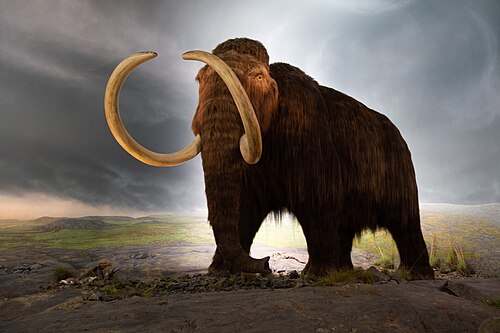
 🎨 復元図
Model at the Royal BC Museum
復元図: Thomas Quine · CC BY 2.0 · Wikimedia Commons 元ファイル
生体復元図は化石に基づく研究者・画家の解釈であり、実際の色彩や外見には不明な部分があります。
ケナガマンモス
Mammuthus primigenius (Woolly Mammoth · ケナガマンモス)
化石のみで知られる種です。IUCNレッドリストは西暦1500年以降に生息していた種のみを評価するため、等級はありません。
💡 身近な例で見るサイズ・重さ・速度
- 📏 体長 6.5m — 乗用車(約4.9m)の約1.3台分の長さ
- 🏢 体高 3.35m — 身長1.75mのヒトの約1.9倍の高さ
- ⚖️ 体重 5.4t — 軽自動車(約1t)の約5.4台分の重さ
- ⚡ 速度 35km/h — ウサイン・ボルトの100m世界記録平均速度(37.6km/h)の約0.9倍
比較基準: 大型バス約12m、乗用車約4.9m、軽自動車約1t、バスケットゴール3.05m、クレジットカード8.56cmなどの標準規格。
上記数値から算出したサイト独自の換算値であり、科学的な測定指標ではありません。
📖 1. 概要
最大4.2mの長さの湾曲した牙と長い毛で氷河期の極寒を生き抜いた、新生代を代表する長鼻目の大型哺乳類です。
🌐 Wikipedia 要約抜粋The woolly mammoth is an extinct species of mammoth that lived from the Middle Pleistocene until its extinction in the Holocene epoch. It was one of the last in a line of mammoth species, beginning with the African Mammuthus subplanifrons in the early Pliocene. The woolly mammoth began to diverge from the steppe mammoth about 800,000 years ago in Siberia. Its closest extant relative is the Asian elephant. The Columbian mammoth lived alongside the woolly mammoth in North America, and DNA studies show that the two hybridised with each other. Mammoth remains were long known in Asia before they became known to Europeans. The origin of these remains was long debated and often explained as the remains of legendary creatures. The mammoth was identified as an extinct elephant species by Georges Cuvier in 1796.
🦴 2. 体の構造と特徴
熱の放出を抑える小さな耳と、低温下での酸素運搬に特化したヘモグロビンタンパク質を進化させました。
🔍 3. 化石記録と古生態
シベリアの永久凍土層から見つかった冷凍標本を通じて、全ゲノム(Genome)の解読が完了しています。
🇰🇷 4. 韓国との関わり
咸鏡北道吉州郡および東海の海底、全羅北道扶安でケナガマンモスの臼歯や牙の化石が出土しています。
📚 出典・確認先
- • Wikipedia “Woolly mammoth”
- • Wikidata Q3699044
- • Fossil taxon — the IUCN Red List assesses only species living or extinct since 1500
- • nhmu.utah.edu — mammoths-and-mastodons-made-great-ice-age-team
- • シルエット: PhyloPic — artrociraptor · CC0 1.0
数値は公開資料で広く引用される代表的な推定値であり、研究や個体により異なる場合があります。